












An Ultra Production Upgrade That Changes the Post-Processing Equation: UltraGLOSS™ LIFT™

By Federico Milano, DPZERO
Introduction
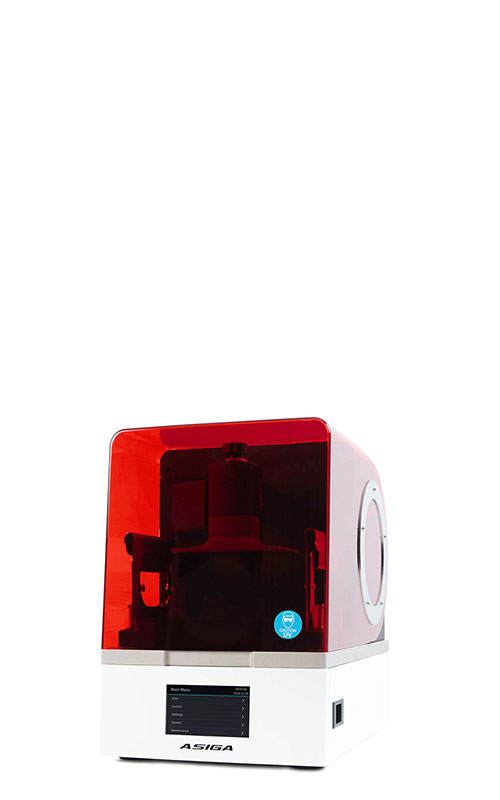
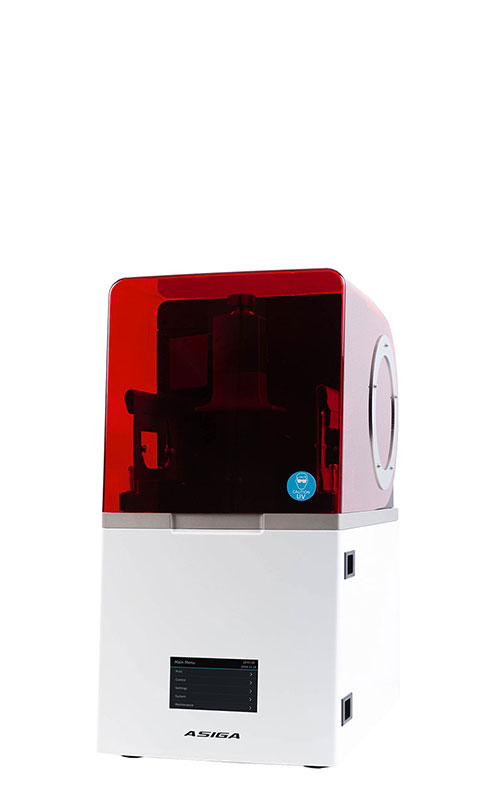
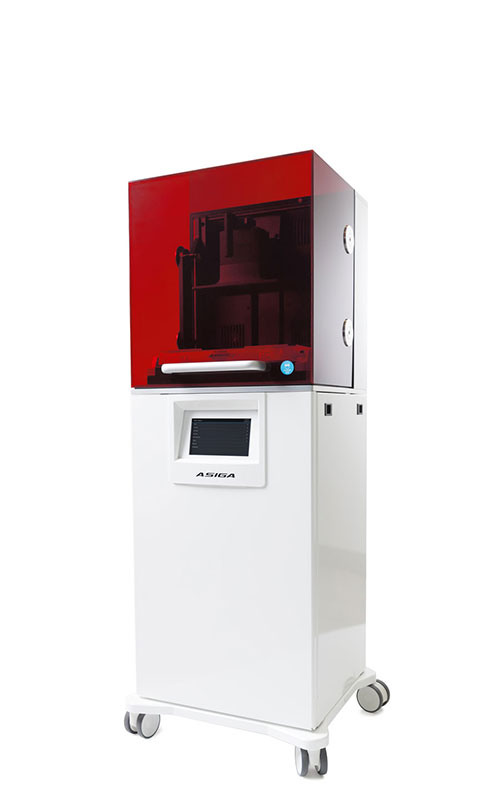
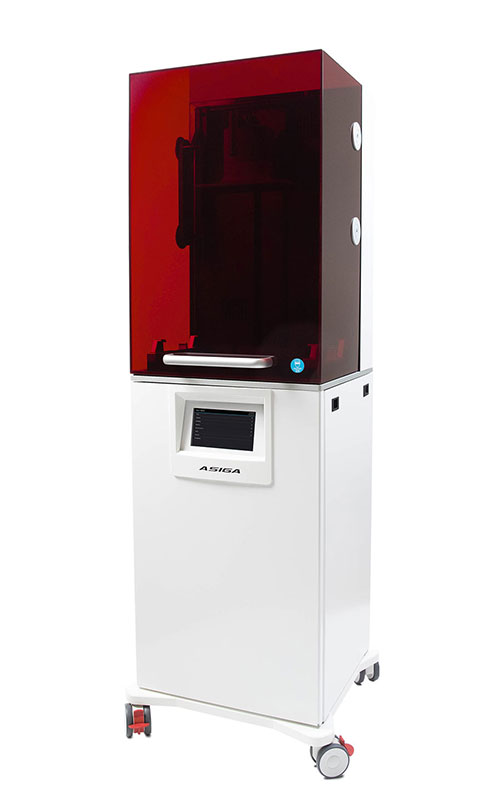
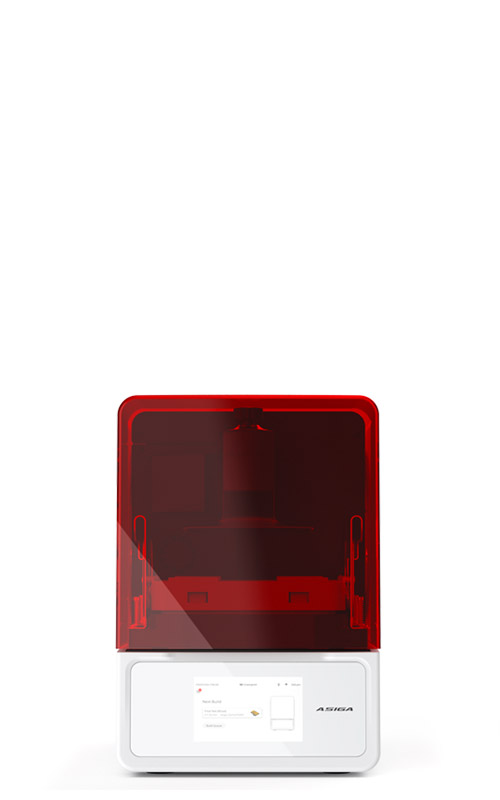
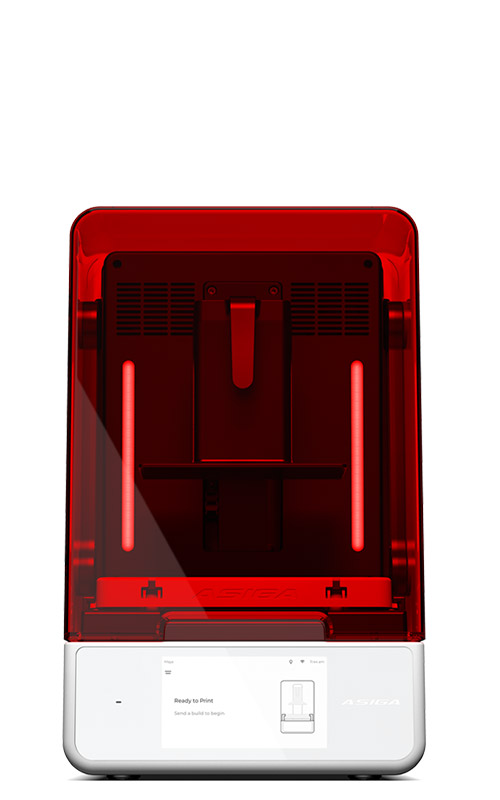
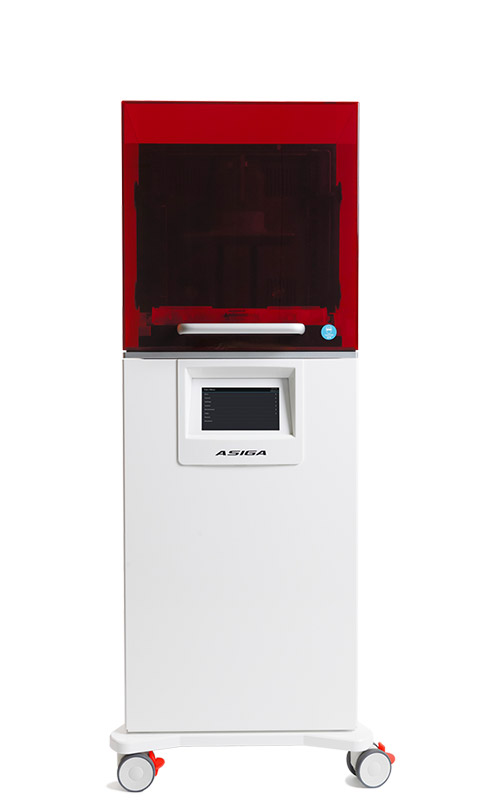
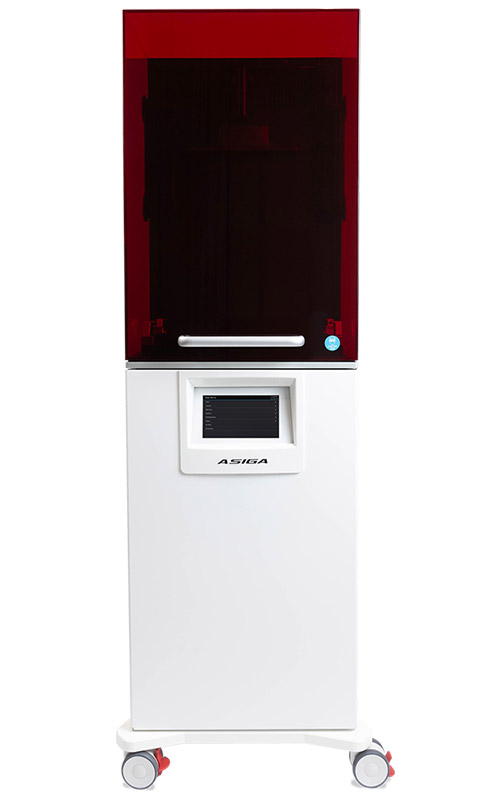
There is a particular category of upgrade that does not change what you make, but rather it changes how much effort it takes to get there. The Asiga UltraGLOSS™ LIFT™ tray belongs to that category. After years of producing clear appliances on Asiga hardware, and after integrating the original UltraGLOSS tray into our splint workflow at DPZERO, I was curious to evaluate the new LIFT-based version under real industrial conditions: not a handful of sample pieces, but a structured, repeatable production run designed to stress-test both print reliability and the post-processing savings that Asiga claims.
The test I am going to describe produced 100 occlusal splints across 10 consecutive print cycles on the Asiga Ultra, using VOCO V-Print Splint Comfort as the build material and Asiga DentaFORM Beige printed models for fit verification. The results were, in a word, definitive.
"The surface was already done. Not almost done. Done. I have been printing splints for years and I have never removed a part from the printer that looked like this without touching it."
Federico Milano
Understanding LIFT™: What the Technology Actually Does
Before describing the test, it is worth being precise about what differentiates this tray from a standard FEP build tray because the mechanism matters for understanding why the results look the way they do.
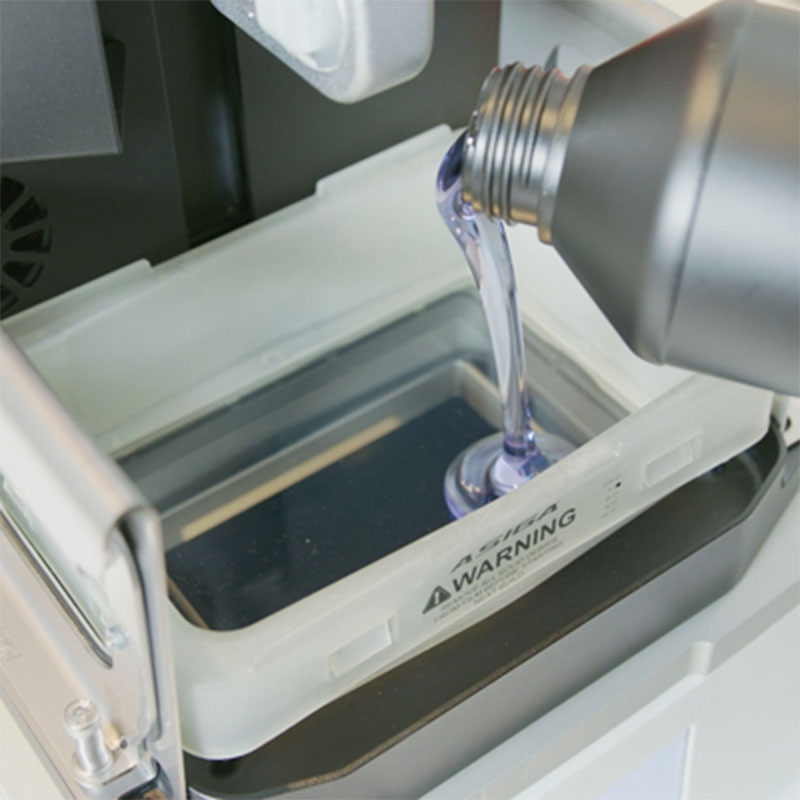
LIFT™ stands for Liquid Interface Film Technology. The principle is straightforward but consequential: the tray film maintains a thin layer of uncured, unpolymerised resin at the curing interface, a persistent cure-free zone between the exposed layer and the film surface. This liquid layer acts as a natural release agent for every single layer separation event throughout the print. The practical effects are threefold. First, peel forces are drastically reduced at every layer, which in turn allows shorter separation distances and faster lift cycles. Asiga states up to twice the print speed depending on resin characteristics. Second, the film is physically protected from the abrasive action of support tips during peel, which extends tray life to a rated 20 litres of resin processed, compared to 5 litres for a standard tray. Third, the reduced mechanical stress on the part during separation preserves geometric integrity in the critical early layers of the print.
The UltraGLOSS™ variant adds a further dimension to this. The film carries a proprietary optical formulation that transfers a mirror-like surface quality onto any face of the print that is in contact with it. This is not a coating applied after the fact — it is a property transferred during polymerisation itself, at the moment the resin cures against the film. The result is a surface finish that, under normal production conditions, would require several passes of mechanical polishing to achieve.
These two mechanisms — the LIFT cure-free zone and the UltraGLOSS™ optical film — are synergistic, not additive. The reduced peel force means the freshly-cured surface separates from the film without micro-tearing or stress-induced roughness; the optical film then ensures that the surface quality imprinted during curing is preserved intact through that clean separation. You cannot replicate this outcome with an optical film on a standard FEP base.
The Test: 100 Splints, 10 Cycles, One Tray
The test protocol was straightforward by design. DPZERO is an industrial laboratory: we do not evaluate technologies under ideal conditions, we evaluate them under the conditions we actually work in, which means volume, repetition and consistency matter as much as peak quality.
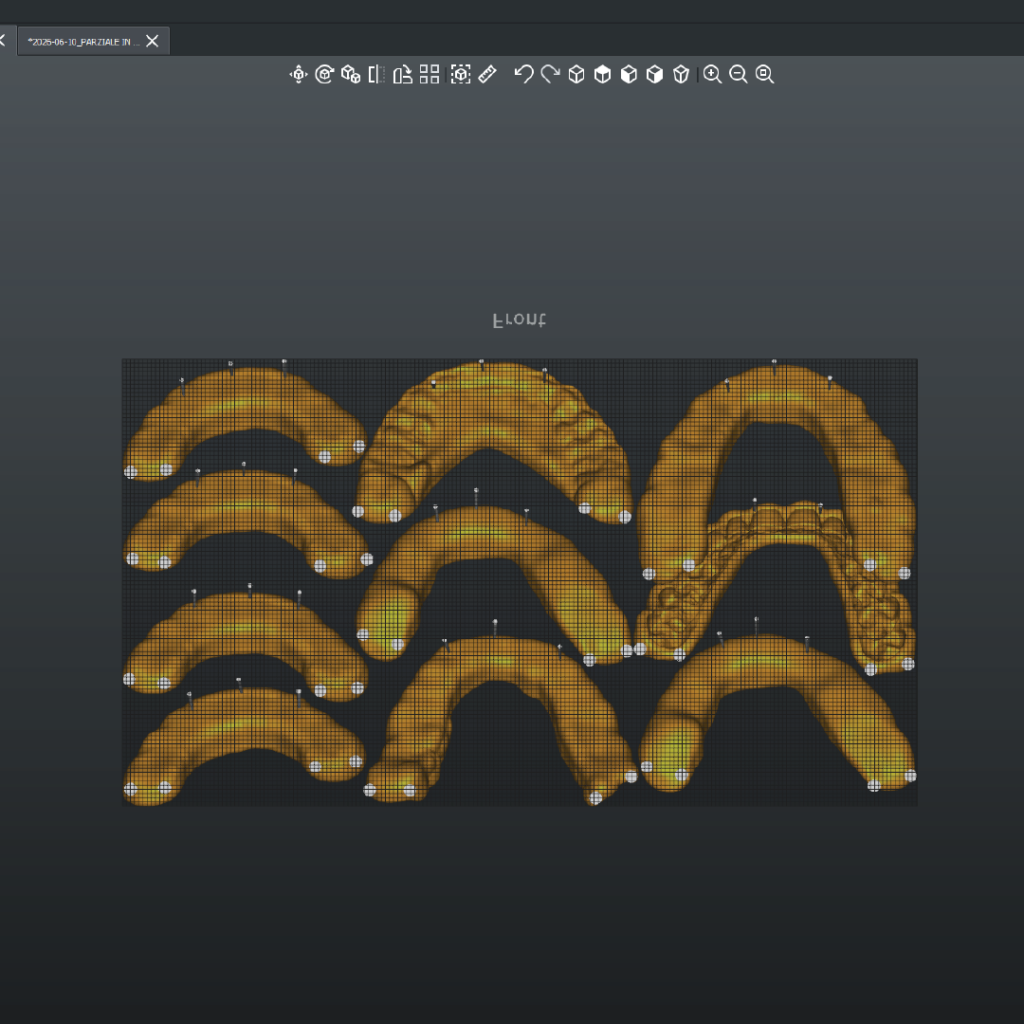
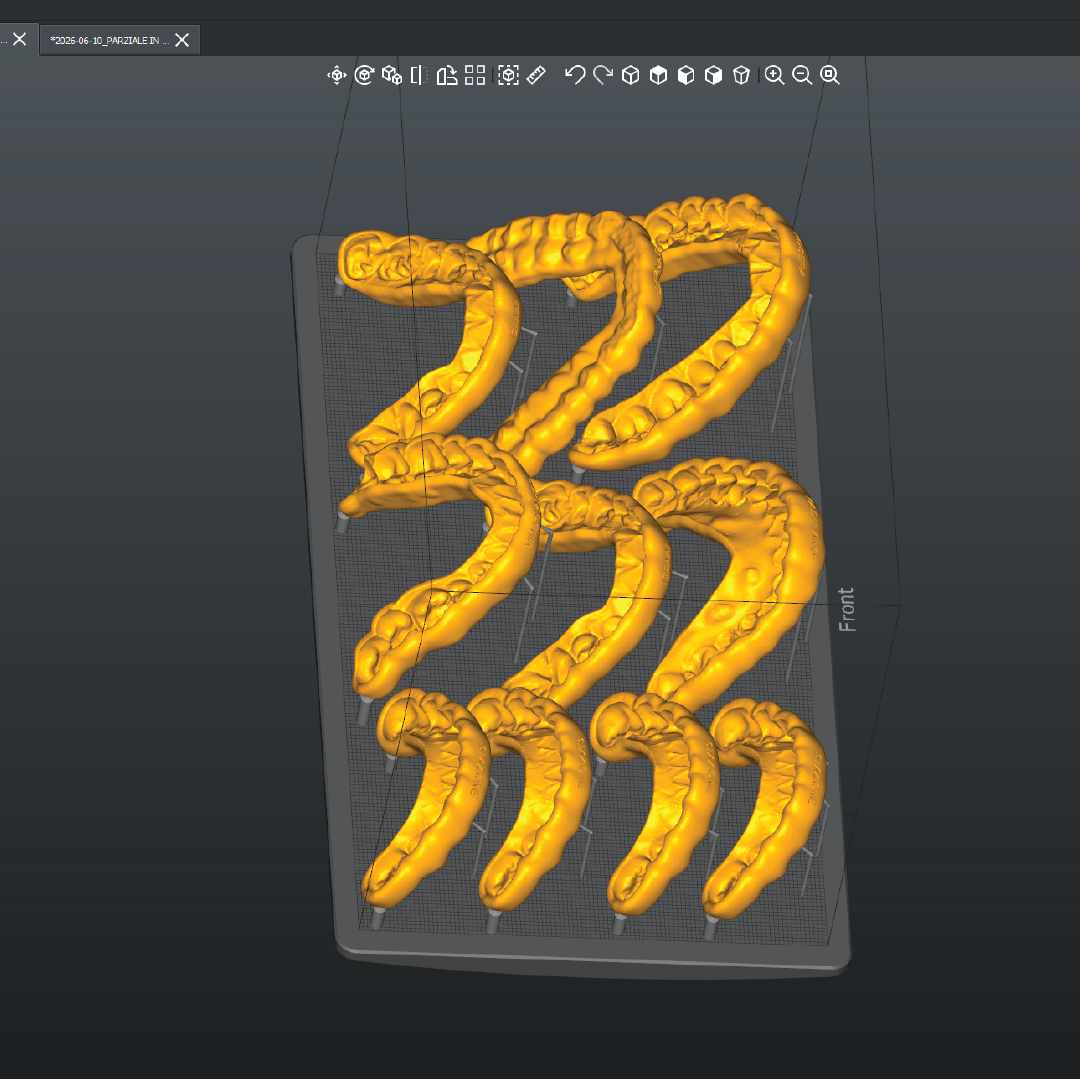
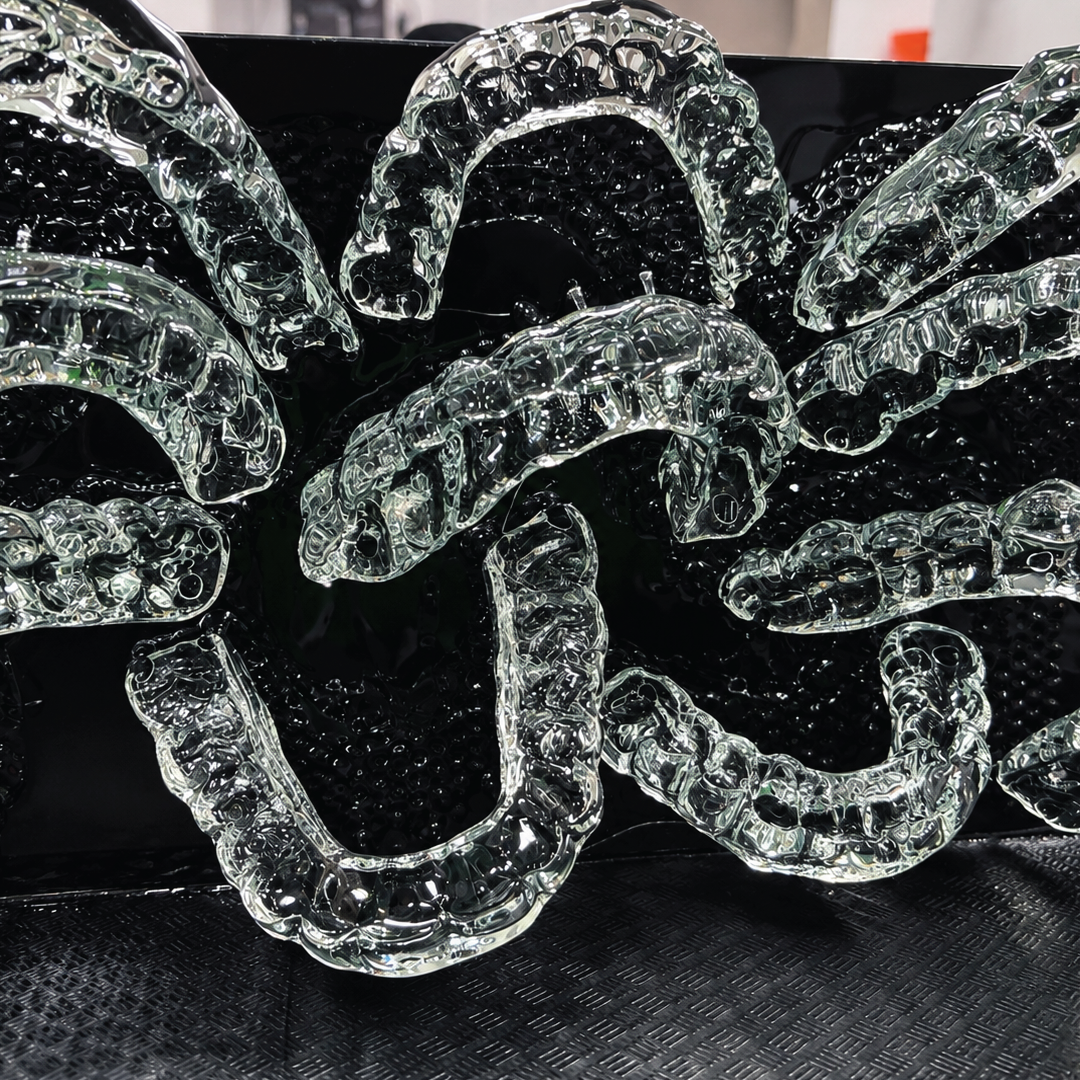
Each print cycle produced 10 occlusal splints in VOCO V-Print Splint Comfort, positioned at 80–85° from the build platform. This near-vertical orientation is our established configuration for transparent appliances: it minimises the contact surface per layer, improves resin drainage, reduces support area and, as a consequence, reduces the visible support attachment points that require the most finishing work. Each splint was supported by two 3 mm sprue supports per side and two 1 mm safety supports in the anterior central region, a configuration that has proven reliable across thousands of production cycles on our Asiga printers.
The nesting strategy was prepared in Asiga Composer. Splints were oriented at 75–85° from the build platform. This angular range balances surface quality, resin drainage and support footprint. At this inclination, each layer intersects a minimal cross-section of the arch geometry, reducing peel forces per layer and improving the surface quality of the occlusal face. Support placement followed a consistent logic: two 3 mm diameter sprue supports on each distal end of the arch, positioned on the outer edges where removal leaves no clinically relevant mark, and two or three 1 mm flexible supports along the anterior central region, sufficient to stabilise the thinner incisal zone without creating significant contact points on the labial surface. This combination provides the mechanical stability needed for a reliable build while keeping post-processing intervention minimal and localised.
The 10 cycles were run consecutively, without interruption and without tray maintenance between runs. At the end of the tenth cycle, the tray showed no signs of bubbling, film fatigue or surface degradation This result is consistent with the extended life specification of the LIFT™ design.
Total production outcome across the full test batch: 100 splints produced, 100 accepted. Zero print failures. Zero detachments. Zero clinically significant deformations. Quality was consistent from cycle 1 to cycle 10, with no observable degradation in either print reliability or surface quality.
Surface Quality: The Result You See Before You Process
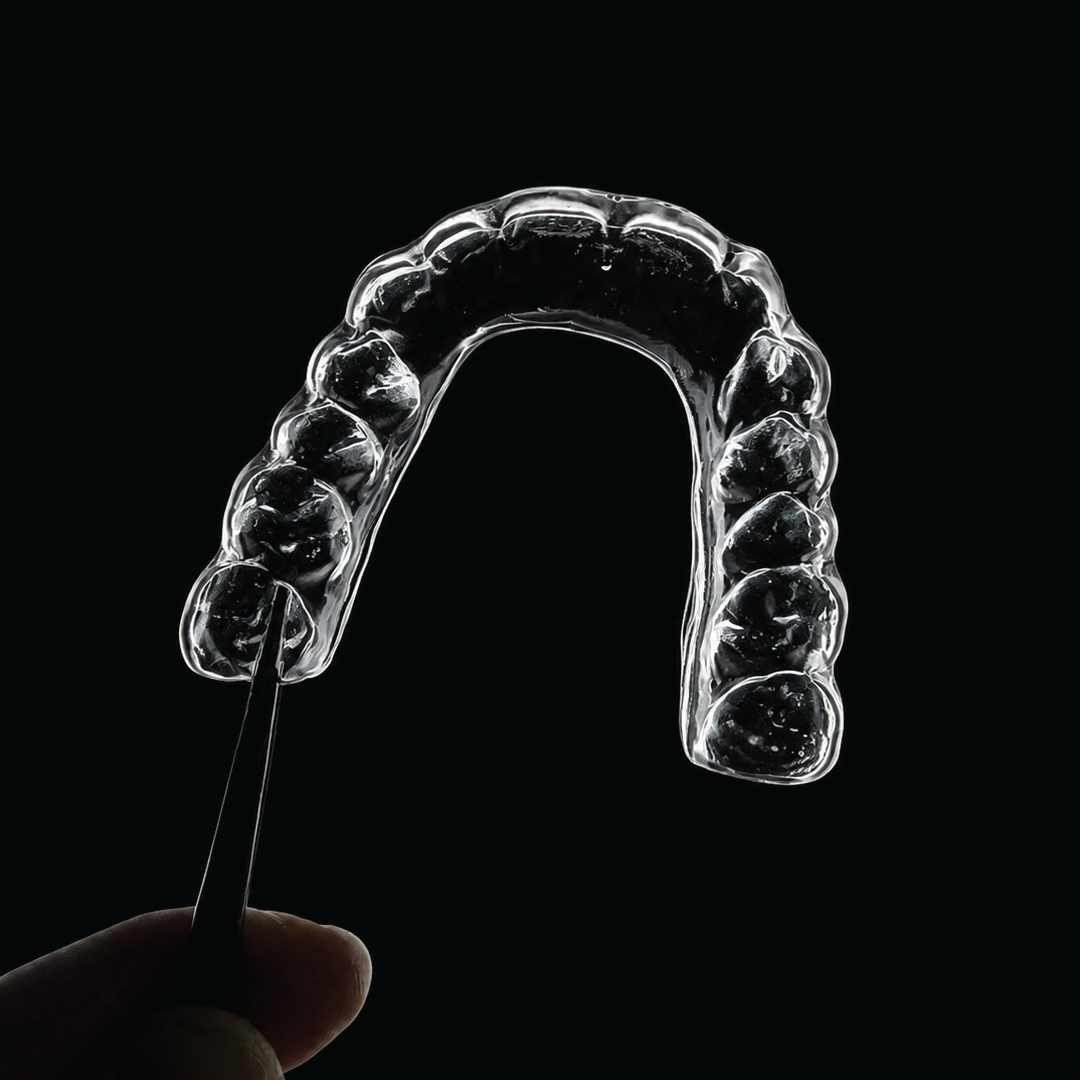
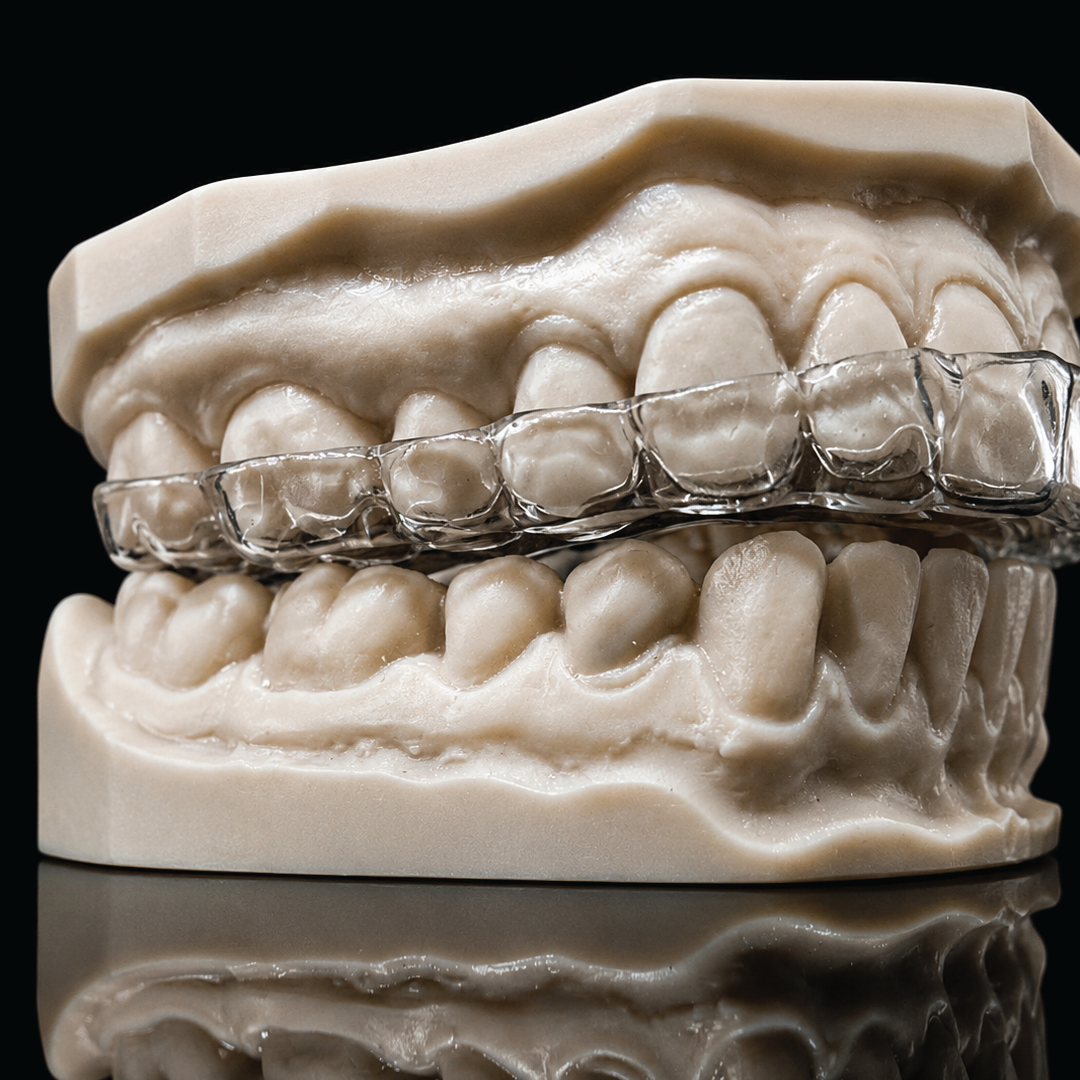
This is where the UltraGLOSS™ LIFT™ tray does something I had not previously encountered in transparent appliance production. After washing, drying and final cure (standard post-processing with no additional finishing steps) the splints presented a surface finish I would describe as optically complete. High transparency, specular gloss, no visible layer boundaries, no diffuse light scattering from surface micro-roughness.
To put this in production terms: the finishing operation that traditionally follows a transparent appliance print (typically a sequence of abrasive polishing steps, progressively finer grits, followed by a final buffing stage) was not required. In the cases where I applied any finishing at all, it was limited to localised touchups at the support attachment points, which represent a fraction of the surface area and a fraction of the time.
The mechanism, as I described in the technology section, is a combination of reduced peel force and optical film transfer. What this means practically is that the surface quality you see is not the result of what happens after printing, but rather the result of what happens during printing. That is a fundamentally different logic, and it has direct implications for how you design a production workflow around transparent appliances.
Dimensional Accuracy and Clinical Fit
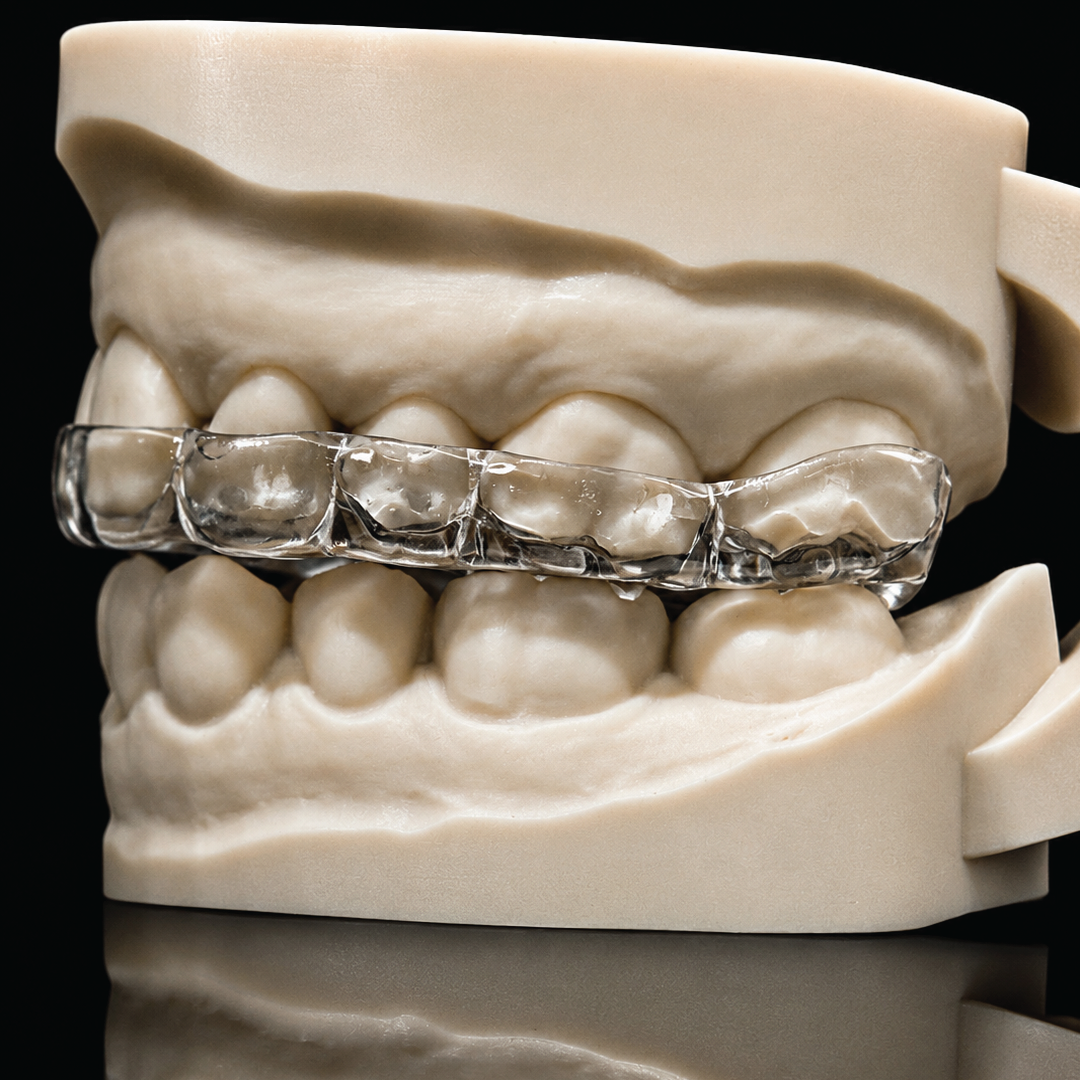
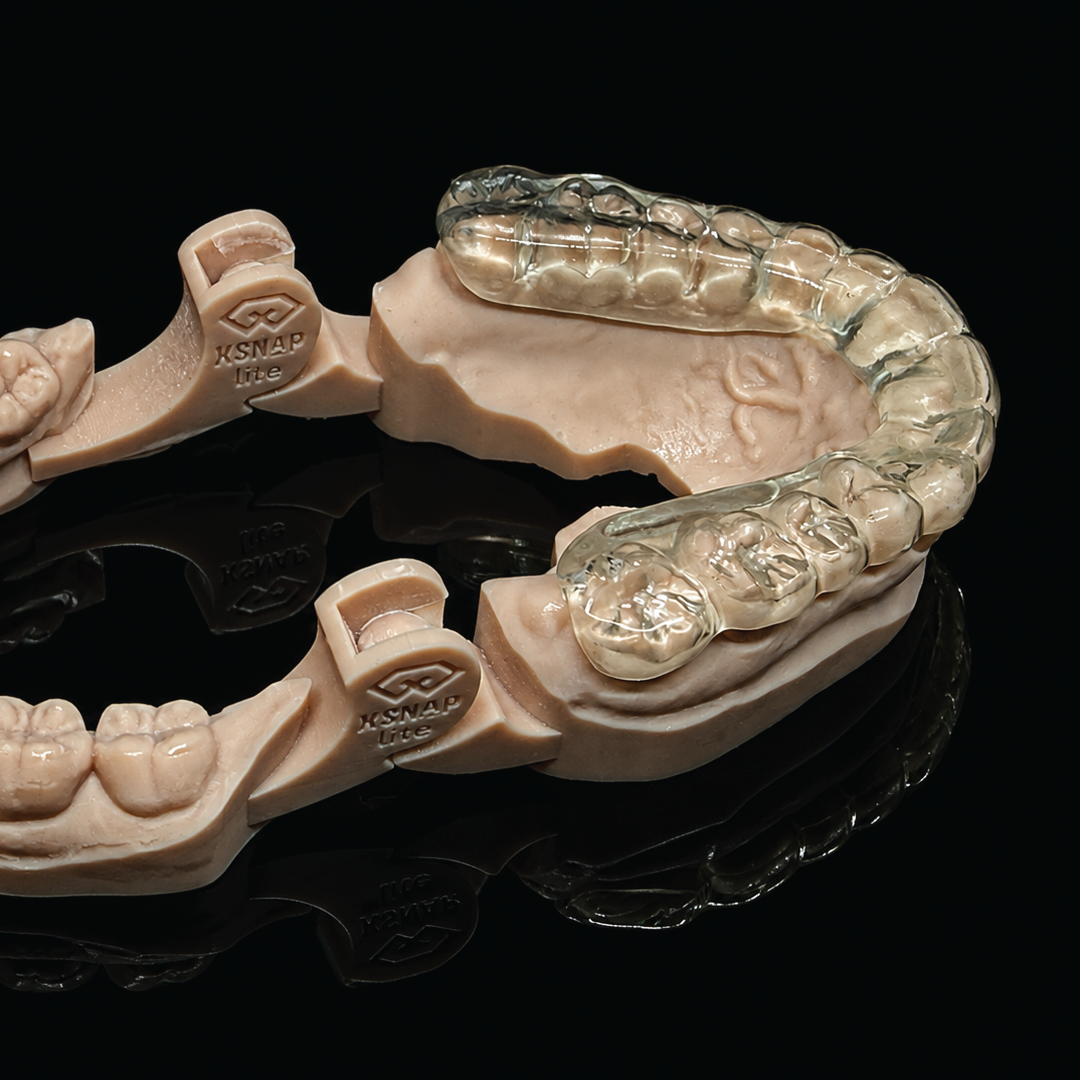
A surface finish upgrade is only valuable if it does not compromise the dimensional result. Every splint in the test batch was verified on DentaFORM Beige printed models, checking fit, passive insertion, contact point accuracy, arch dimension accuracy and perimeter stability.
The conclusion was unambiguous: the UltraGLOSS™ LIFT™ tray introduces no measurable degradation in dimensional accuracy. Every splint fit correctly on the model. There were no detectable deformations, no binding during insertion, no evidence of warping. Repeatability across the 10 cycles was equivalent to what we observe in our standard production with conventional trays.
This is worth stating clearly because there is an intuitive concern that reduced peel forces might affect dimensional integrity in that if the part releases too easily, something must be different about how it forms. The LIFT™ mechanism addresses this directly: the cure-free zone does not change the polymerisation of the part itself, it changes the release dynamics at the interface. The geometry is set by the exposure; the separation is just that: separation, not distortion.
What This Means for an Industrial Production Workflow
At DPZERO, we produce transparent appliances at scale such as occlusal splints, retainers, bleaching trays. These are high-volume, time-sensitive deliverables where the finishing stage has always been the bottleneck. Not the print time. Not the post-cure. The finishing.
A transparent appliance printed with a conventional tray comes off the machine with a surface that is adequate, not finished. Making it finished requires operator time, specific consumables and skill. It also introduces variability, because polishing is a manual process and manual processes vary. When you multiply that variability across a full day’s production and across multiple operators, the result is a quality consistency problem that is difficult to manage with process controls alone.
The UltraGLOSS™ LIFT™ tray changes this equation. The surface exits the printer already at a quality level that, in most cases, does not require intervention. Finishing time per unit drops dramatically. Operator-to-operator variability in the finishing stage is reduced to near zero because there is almost no finishing stage left. And the result is more consistent, not less, because it is determined by the print process rather than by the finishing process.
For a laboratory thinking about this from a production engineering standpoint: the savings are not primarily in material costs or machine costs. They are in operator time and process reliability. Those are the two resources that are hardest to scale and most expensive to replace.
Conclusion
I have been using Asiga hardware since 2018. In that time I have seen meaningful incremental improvements in regards to resolution, speed, material compatibility, software intelligence. The UltraGLOSS™ LIFT™ tray represents something different: a change in the category of finishing effort required for transparent appliance production, not just a reduction within the existing category.
One hundred splints, ten consecutive cycles, zero failures, zero rework on surface quality. The tray finished the test with no signs of degradation and the quality was indistinguishable between the first cycle and the last.
For laboratories producing transparent appliances at any meaningful volume, this is not a marginal upgrade. The combination of LIFT™’s print speed potential, extended tray life and the UltraGLOSS™ surface outcome delivers a measurable, compounding advantage with every cycle. This is the kind of reliability on which a modern dental production workflow is built.
"The surface exits the printer already finished. That changes the workflow not incrementally, but structurally."
Federico Milano
About the Author
Federico Milano is a dental technician with over 25 years of experience and one of Italy’s leading advocates for the industrial transformation of dental laboratory production. Trained as a ceramist and CAD designer, Federico manages the complete production workflow — from digital design to final delivery — with a precision-driven, scalable approach.
In 2009, Federico co-founded DPZERO in Gallarate, a highly digitised dental laboratory specialising in full-arch implant prosthetics and 3D-printed nanoceramic restorations. DPZERO operates fully digital CAD/CAM workflows and is currently developing a proprietary Manufacturing Execution System (MES) with an AI-driven production scheduling layer — a model designed for industrial-scale dental manufacturing.
Federico has been using Asiga 3D printers since 2018, after an extensive evaluation of the leading resin printing technologies available. Asiga is his benchmark for additive production, particularly for full-arch prosthetic shells in nanoceramic resin — one of the most demanding applications in terms of geometry complexity, dimensional accuracy and repeatability. His workflow integrates 3Shape, Exocad, Blender and Asiga Composer with high-aesthetic nanofill resin materials.
Share: