












Raising the standard of post-curing for dental 3D printing

By Jeroen Klijnsma
Post-Curing Matters More Than You Think
As dental technicians, we have always understood that the quality of a restoration is determined not just by the design or the printing process, but by every single step in the workflow. Over the past decade, digital dentistry – and specifically dental 3D printing – has transformed how we produce everything from occlusal splints and surgical guides to provisional restorations and full dentures. Yet one stage of the workflow has, until recently, received insufficient attention: post-curing.
Post-curing is not a formality. It is a critical biocompatibility checkpoint. When a photopolymer resin emerges from a 3D printer, it is only partially polymerised. Without thorough and controlled post-curing, residual monomers remain in the material. Those monomers can leach into the oral environment, potentially causing tissue reactions, mucosal irritation, and sensitisation with patients. For us as technicians, ensuring that every printed product is fully cured to the manufacturer’s validated specifications is not a recommendation, it is our professional and ethical obligation.
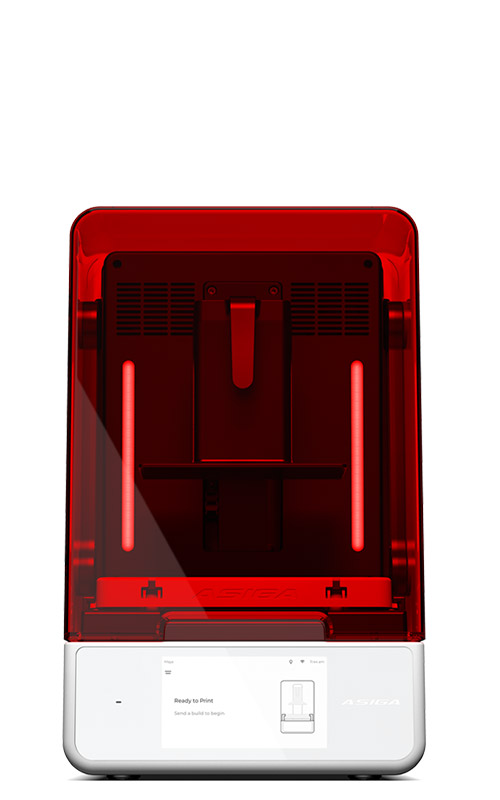
This is precisely why the launch of the Asiga Cure represents a significant step forward. It is not simply a better light box. It is a scientifically validated, intelligent post-processing system built specifically to meet the demands of modern biocompatible dental 3D printing workflows.
"Patient safety is our first responsibility. Every printed restoration placed in a patient's mouth begins and ends with us - and post-curing is where biocompatibility is either guaranteed or compromised."
Jeroen Klijnsma
Patient safety above all else
As dental technicians working with Class I, IIa, and IIb medical devices – as classified under frameworks such as the EU Medical Device Regulation (EU MDR) and the Australian Therapeutic Goods Administration (TGA) – we operate under a duty of care that extends well beyond technical skill. The materials we use, and how we process them, directly affect patient health.
The ISO standards for biological evaluation of medical devices, mention clear requirements for biocompatibility, including cytotoxicity testing. Residual monomers in incompletely cured photopolymer resins are a recognised cytotoxicity risk. Multiple studies in the dental literature have demonstrated that under-cured resin-based materials can release measurable levels of monomers such as TEGDMA, HEMA into simulated oral fluids.
It follows that the device we use to post-cure restorations must be capable of delivering a reproducible, validated light dose – every single time, regardless of chamber load, operator, or time of day. Anything less introduces unacceptable variation into a patient-safety-critical step. This is the standard the Asiga Cure has been designed to meet.


What is the Asiga Cure?
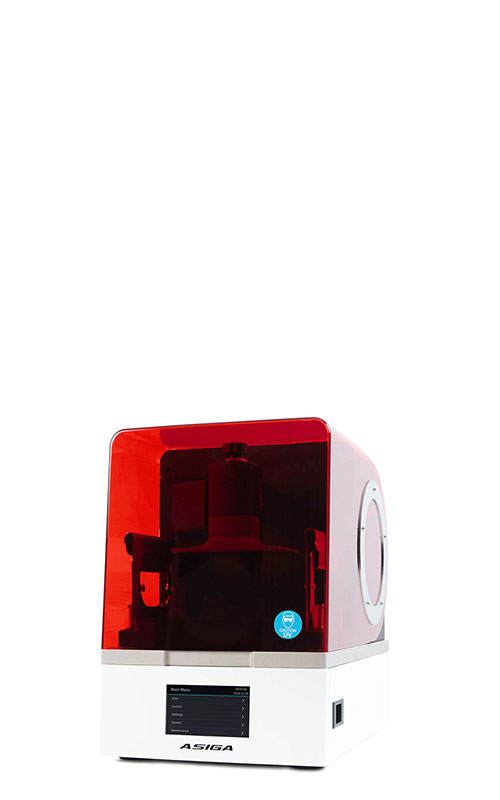
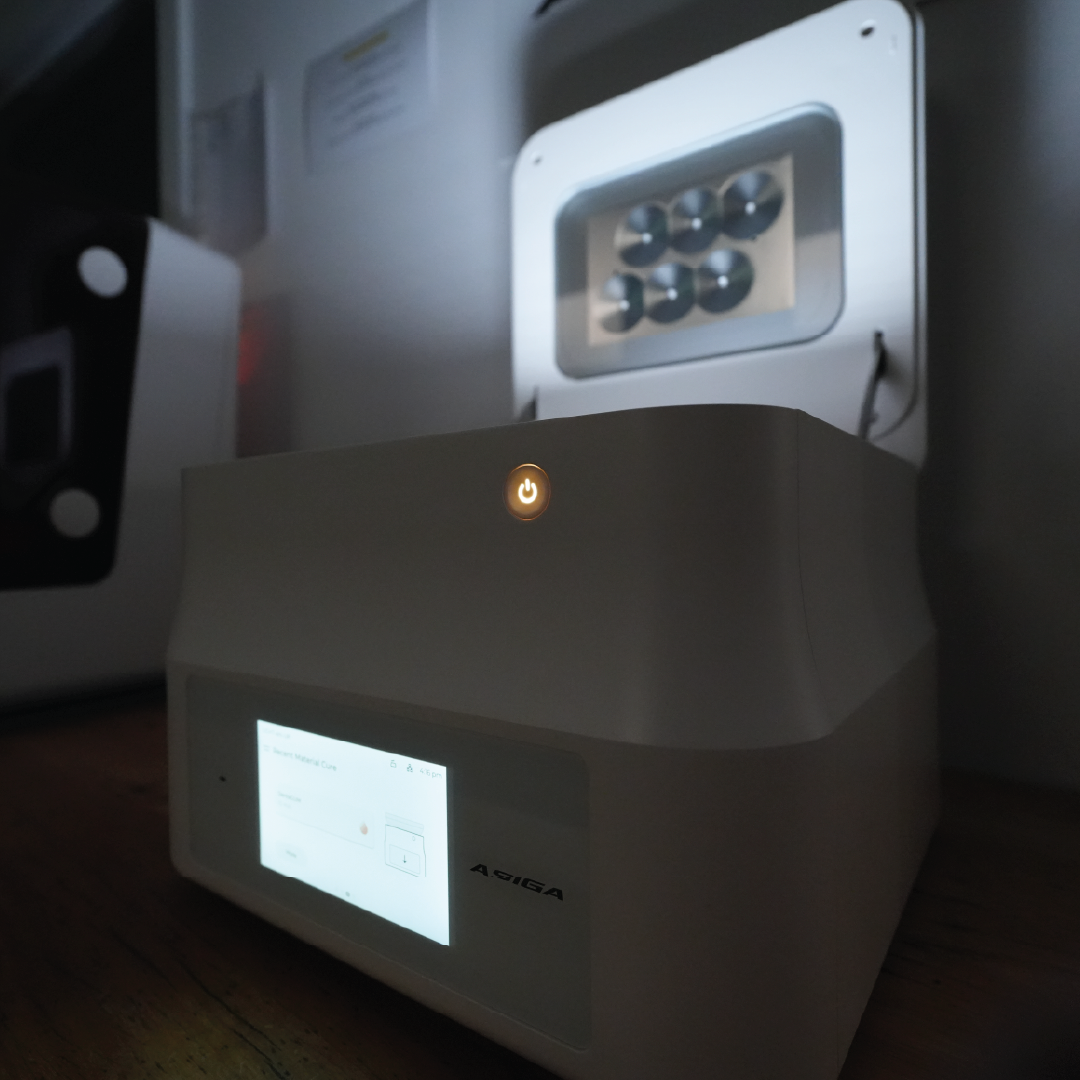
The Asiga Cure is a professional UV post-curing station developed by Asiga, a Sydney-based dental 3D printing company that has been at the forefront of digital dentistry since introducing the world’s first LED-based DLP 3D printer in 2011. The Cure has been engineered to bring the same rigour to post-processing that Asiga’s printers bring to production.
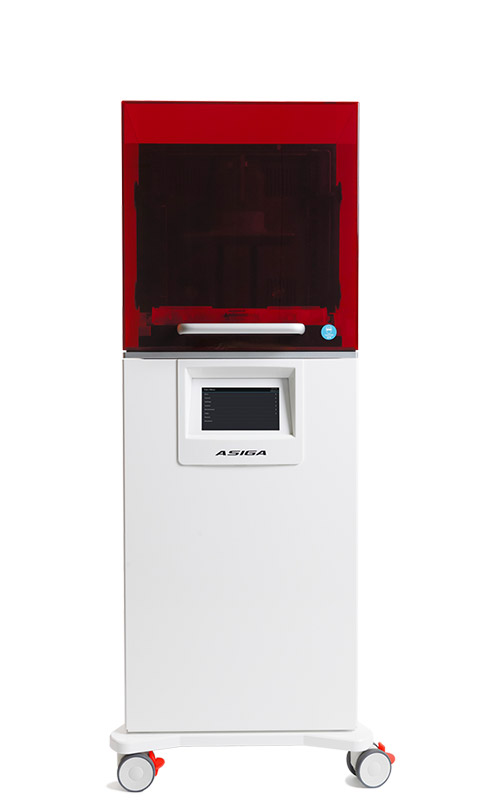
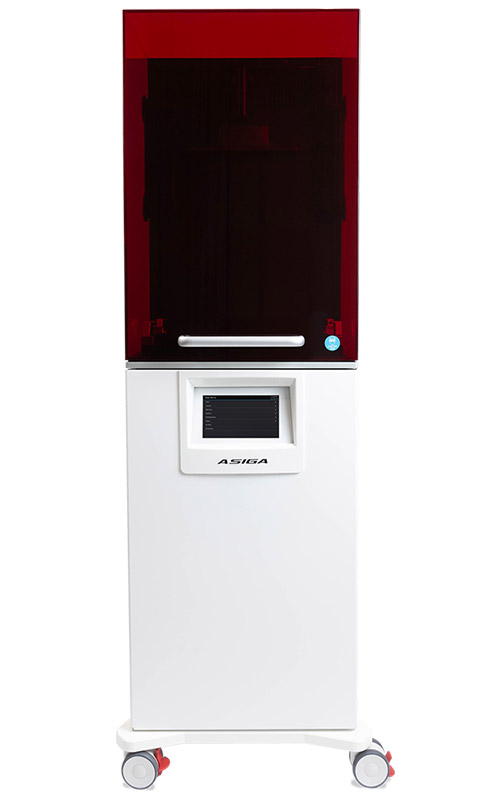
Available in two chamber sizes – the Cure 1.5 L and the Cure 2.5 L – the unit is suitable for both smaller clinical settings and high-throughput dental laboratories. It has been recognised with a prestigious Good Design Award, reflecting its combination of thoughtful engineering and superior functionality.
Key Features and Technical Specifications
The Asiga Cure is built around a set of intelligent, interconnected features that work together to deliver verified, reproducible curing outcomes. Each feature addresses a specific limitation found in conventional UV curing boxes.
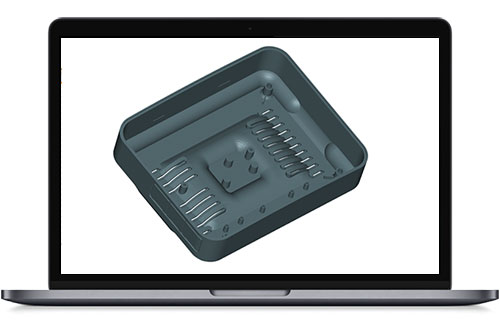
At the core of the device is dose-controlled UV curing, where a built-in radiometer array measures the actual light dose delivered to the chamber, automatically adjusting parameters based on chamber load and geometry. A vacuum chamber subtracts oxygen from the environment before curing begins, eliminating the oxygen inhibition layer that impairs surface hardness and increases residual monomer content. Complementing this, infrared heating up to 80°C enhances post-curing kinetics, improving the mechanical strength, dimensional stability, and thermal performance of cured parts. For applications requiring additional oxygen management, an optional nitrogen inlet allows inert gas to be introduced when resin-specific protocols call for it.
From a workflow perspective, the Asiga Cure features touchless lid operation for hands-free opening and closing, keeping the process efficient and hygienic while reducing contamination risk and operator fatigue. Users can create and store customisable curing programs for specific materials and applications, ensuring protocol consistency across operators and shifts. Factory-validated curing protocols for Asiga’s dental materials come pre-loaded as well, removing guesswork from post-curing parameter selection.
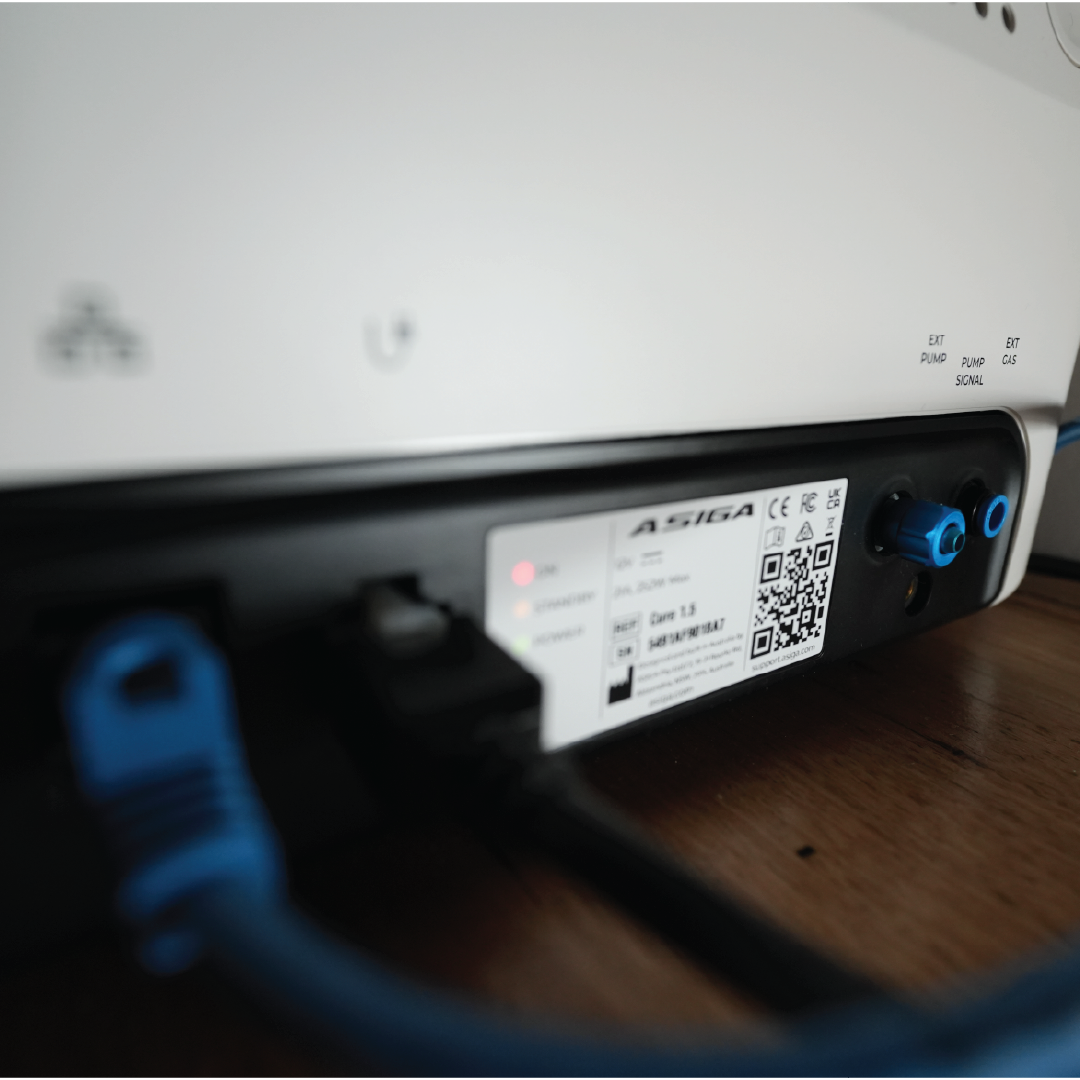
On the connectivity and configuration side, Wi-Fi and Ethernet integration supports remote monitoring, software updates, and workflow data logging for traceability and quality management. The unit is available in two chamber sizes — a 1.5 L configuration suited to single-case or clinical use, and a 2.5 L version designed for production laboratory environments with higher throughput demands. External vacuum ports are also available, allowing connection of an external vacuum pump for faster vacuum performance.
Intelligent Curing: The Radiometer Array
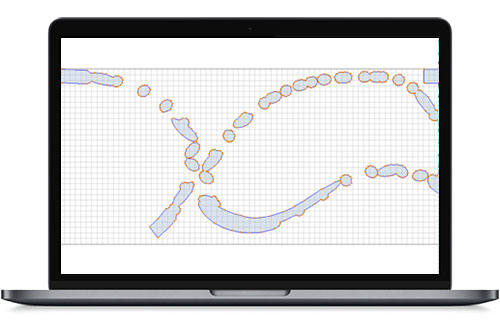
At the heart of the Asiga Cure is a built-in radiometer array – a bank of light measurement sensors that continuously monitor the actual UV dose reaching objects inside the chamber. This is a fundamentally different approach to curing from a basic timer-based system.
In a conventional curing unit, the technician sets a time and hopes that the UV output of the lamp is sufficient. As bulbs age or are replaced, their output can change significantly. The actual dose delivered to the resin may be very different from what was intended. The Asiga Cure eliminates this uncertainty: the radiometer array measures what the parts in the chamber are actually receiving, and the system automatically adjusts the curing parameters to compensate for differences in chamber load, part geometry, and light source output.
The result is a dose-verified, reproducible cure every time. For biocompatible dental materials, this is not just a convenience. It is a quality assurance requirement.
Solving the Oxygen Inhibition Problem
Oxygen inhibition is one of the most significant challenges in photopolymer curing. When UV light initiates polymerisation, oxygen molecules compete with the photo-initiator radicals, influencing the reaction at the surface of the material. The result is an incompletely cured, tacky surface layer and more critically, elevated residual monomer levels at the part’s exterior.
For dental restorations, this is a clinical concern. The surface is the zone of direct patient contact, and it is precisely the zone most at risk from oxygen inhibition. The Asiga Cure addresses this with a two-stage approach.
First, the vacuum chamber evacuates air and therefore oxygen from the curing chamber before the UV cycle begins. The optional vacuum ports minimise the time required for this step. Second, for material workflows that require it, nitrogen gas can be introduced as an inert backfill, further displacing any residual oxygen. Together, these features achieve the oxygen-free curing environment that photopolymer manufacturers specify for optimal surface quality and mechanical performance.
For occlusal splints, this capability is particularly valuable. The optical clarity and surface hardness of a splint are directly affected by the degree of oxygen inhibition. With the Asiga Cure’s vacuum-first workflow, technicians can consistently achieve the surface quality that patients and clinicians expect.
Infrared Heating: Optimising Curing
The addition of infrared heating (up to 80°C) to the Asiga Cure’s capability set reflects a sophisticated understanding of photopolymer chemistry. Temperature plays a significant role in the process of radical polymerisation. At elevated temperatures, molecular mobility increases, allowing polymer chains to reach higher conversion rates than would be achievable at ambient temperature.
In practical terms, this means that curing with IR heating produces parts with greater mechanical strength, improved dimensional stability, and better thermal resistance. For restorations such as provisional crowns and bridges, denture bases, and surgical guides, these properties directly translate to improved clinical performance and longevity.
The IR heating function operates in combination with the UV curing cycle and temperature parameters are configurable as part of the unit’s settings.
Clinical Applications: Where the Cure Delivers
The Asiga Cure is designed to support the full range of biocompatible dental materials produced on Asiga printers and compatible third-party systems. The following applications illustrate where its advanced features make the greatest clinical difference.
Occlusal Splints
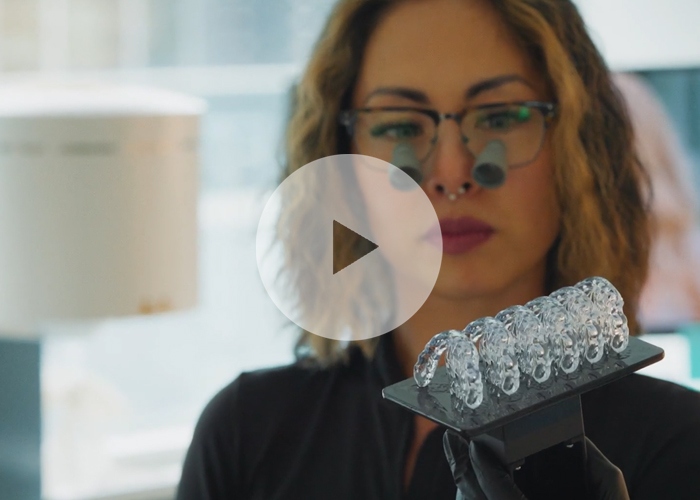
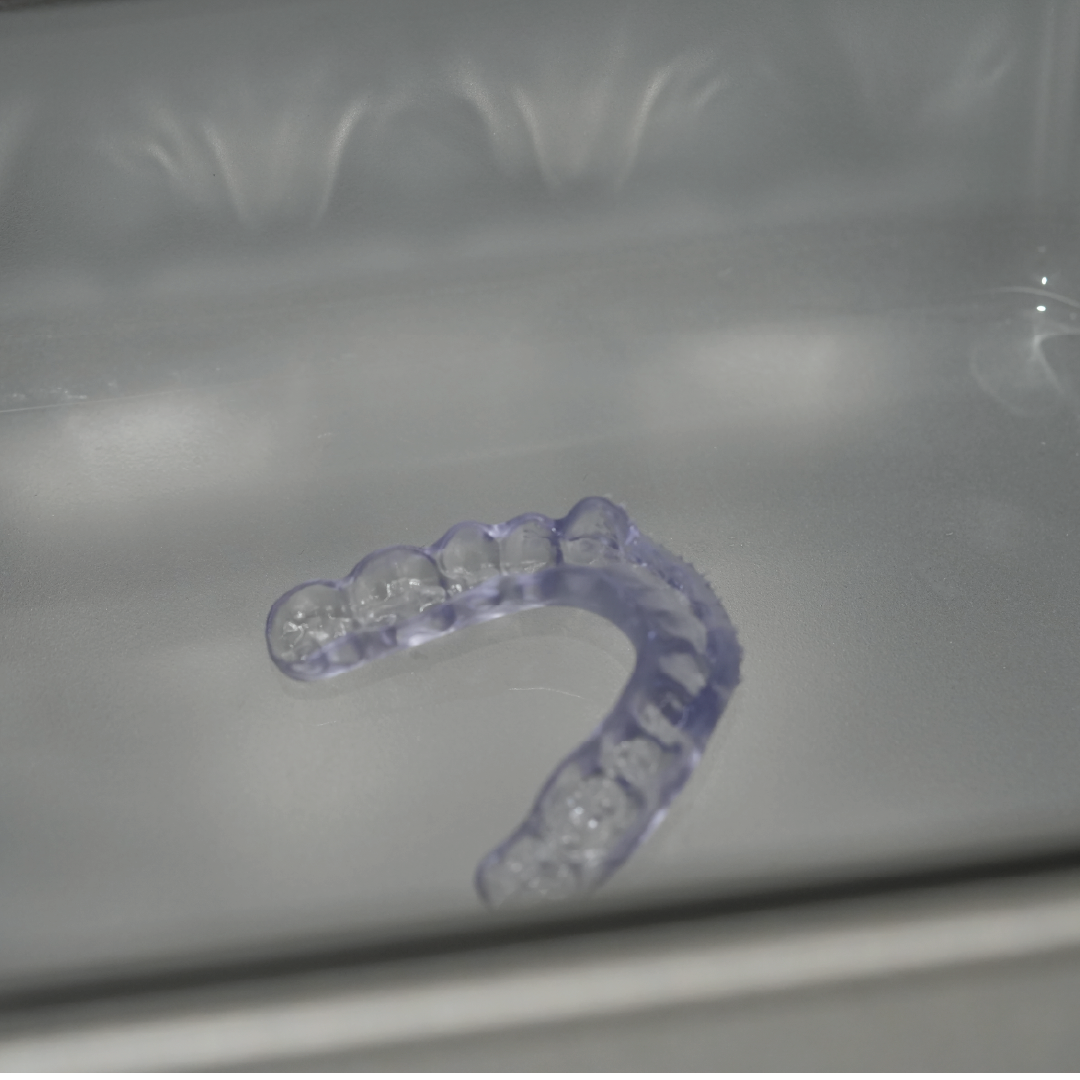
Splint therapy is one of the most common applications for dental 3D printing. The vacuum and nitrogen workflow of the Asiga Cure delivers the optical clarity and surface hardness that a well-fitted, comfortable splint requires. Validated protocols ensure that splint resins such as Asiga DentaSPLINT/KeySPLINT SOFT achieve optimal polymer conversion, reducing the risk of surface tackiness and residual monomer exposure.
Provisional Restorations
Provisional crowns and bridges produced from materials like Asiga DentaTOOTH require consistent curing to achieve the strength and aesthetic properties needed for short- and medium-term clinical use. The dose-controlled curing system ensures that every provisional exits the Cure with verified mechanical properties, regardless of how many units are cured simultaneously.
Surgical Guides
Asiga DentaGUIDE is a biocompatible, autoclavable material for surgical guide fabrication. Surgical guides are used intraoperatively, making their biocompatibility non-negotiable. The Cure’s validated protocols for biocompatible Class I and Class IIa materials ensure that the stringent post-curing requirements of surgical guide resins are reliably met, minimising residual monomer content before the guide is placed in a sterile field.
Full and Partial Dentures
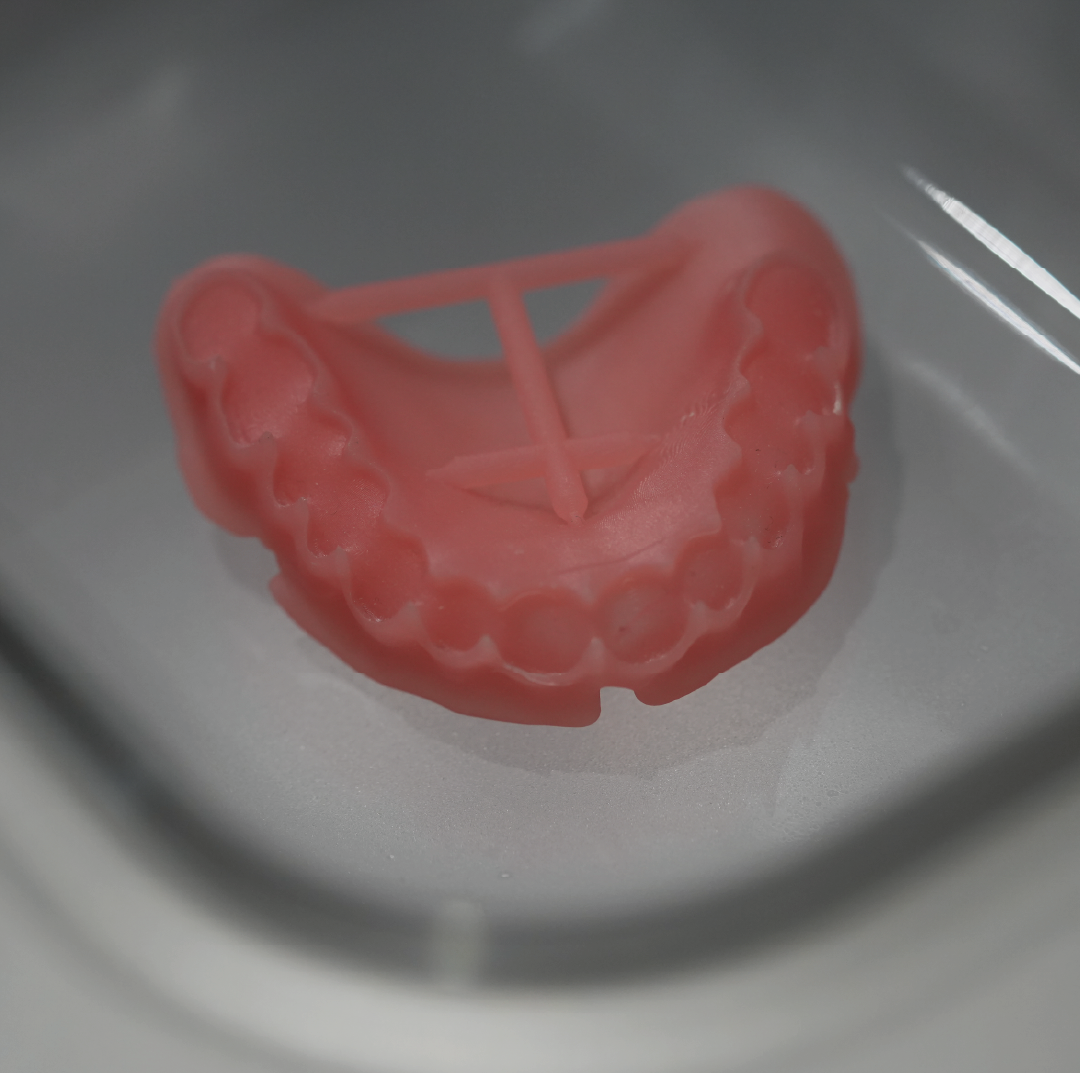
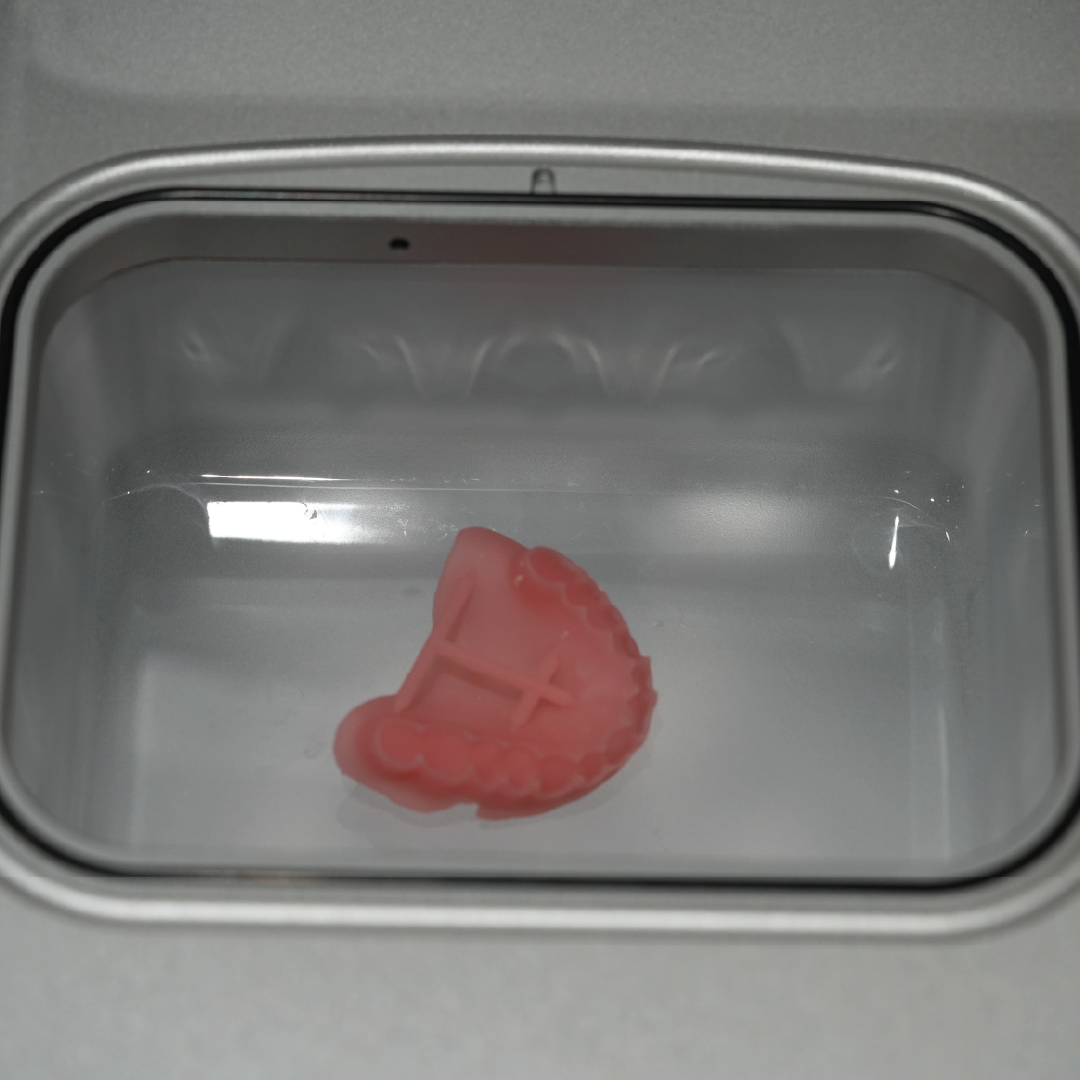
Denture base materials and denture tooth materials (such as Asiga DentaBASE and DentaTOOTH) require thorough curing to achieve the biocompatibility, strength, and polish-ability needed for long-term prosthetic use. The IR heating capability of the Cure is particularly beneficial here, improving the mechanical performance of denture materials beyond what is achievable with UV alone.
Orthodontic Appliances and Aligner Models
Clear aligner models and orthodontic appliances benefit from the Cure’s consistent, repeatable results. In high-volume aligner production workflows, the 2.5 L chamber allows multiple models to be processed simultaneously while the radiometer array ensures that every model in the chamber receives a validated dose.
Custom Impression Trays
Materials such as Asiga DentaTRAY require precise curing to maintain the rigidity and dimensional accuracy needed for quality impressions. Under-cured impression trays can flex under load, leading to inaccurate impressions and compromised downstream restorations.
Workflow Integration and Efficiency
The Asiga Cure is designed not just for superior technical performance, but for seamless integration into busy laboratory and clinical workflows. Several features contribute directly to day-to-day efficiency.
The touchless lid operation allows the technician to open and close the chamber without hand contact, keeping the workflow hygienic and reducing the risk of UV exposure. Network connectivity via Wi-Fi or Ethernet enables remote monitoring of curing cycles, software updates delivered over the network, and data logging for quality management traceability. In a regulated medical device manufacturing environment, the ability to maintain records of curing parameters for each batch is an important quality assurance capability.
The customisable protocol system allows the laboratory to create and store named curing programs for each material in use. Once a protocol is validated, it can be recalled with a single selection, eliminating operator-to-operator variability. Combined with the factory-validated presets for Asiga materials, this means new staff can be trained to perform post-curing to a consistent standard from day one.
How the Asiga Cure Compares
The post-curing device market offers several alternatives, including the Formlabs Form Cure, Otoflash G171, NextDent LC-3DPrint Box, Ackuretta CURIE Plus, and Dentalfarm PHOTOPOL. Each has merits, but none combines dose-controlled UV curing, vacuum-first oxygen management, IR heating up to 80°C, and network connectivity in a single validated platform.
Some alternatives offer faster cycle times or tighter integration with a specific printer ecosystem. However, for laboratories working with biocompatible dental materials where patient safety and regulatory compliance are paramount, the Asiga Cure’s combination of dose verification, oxygen control, and validated protocols represents a category of performance that simpler UV boxes cannot match.
The Cure’s scalability across two chamber sizes also makes it suitable for laboratories of all volumes — from single-chair practices processing one or two units per day, to high-throughput production labs running dozens of builds per shift.
Return on Investment: Beyond the Initial Cost
The Asiga Cure represents a higher upfront investment than basic UV curing boxes. As with any capital equipment decision, it is important to evaluate this cost in the context of the long-term value delivered.
From a direct cost perspective, the Cure’s validated protocols and dose-controlled approach significantly reduce the incidence of rework caused by under- or inconsistently cured parts. Failed prints and remakes are expensive in both materials and time. A reproducible, validated post-curing process reduces variability and the costly rework that accompanies it.
From a risk management perspective, the cost of a single adverse event attributable to a biocompatibility failure — a patient reaction to residual monomers, or a restoration failure linked to poor post-curing — far exceeds the cost of investing in a system that virtually eliminates this risk. Our professional indemnity and our patients’ wellbeing both depend on getting post-curing right. Finally, from a workflow perspective, the time saved through automated protocols, network-based monitoring, and validated presets has a compounding value in a busy laboratory environment.
About the Author
Jeroen is a European trained Dental Technician, Digital Specialist and global speaker with extensive experience in 3D manufacturing, like printing, milling and digital workflows.
Collaborating with industry leading manufacturers, allowing him to be up to date with the latest technologies and materials.
He is the founder of Dentiq, a full service digital dental laboratory and consultancy/training centre in Melbourne housing many of the world’s leading digital dental technologies.
Being a certified 3Shape trainer, KOL for several brands and having owned and operated multiple labs in Europe and Asia, he can support you with the latest workflows and innovating trends that are upcoming.
Share: