










Economic dental models for thermoforming

By Keith Morgan, ToothWorx Dental Laboratory
In recent years, the market has been flooded with low-cost dental model resins, promising high efficiency at a fraction of the price. However, many clinicians and technicians have found that these budget materials often come with a hidden cost: inconsistency and a lack of crown and bridge accuracy that can compromise the final fit. To combat this, we’ve focused on providing a solution that prioritises reliability without sacrificing speed.
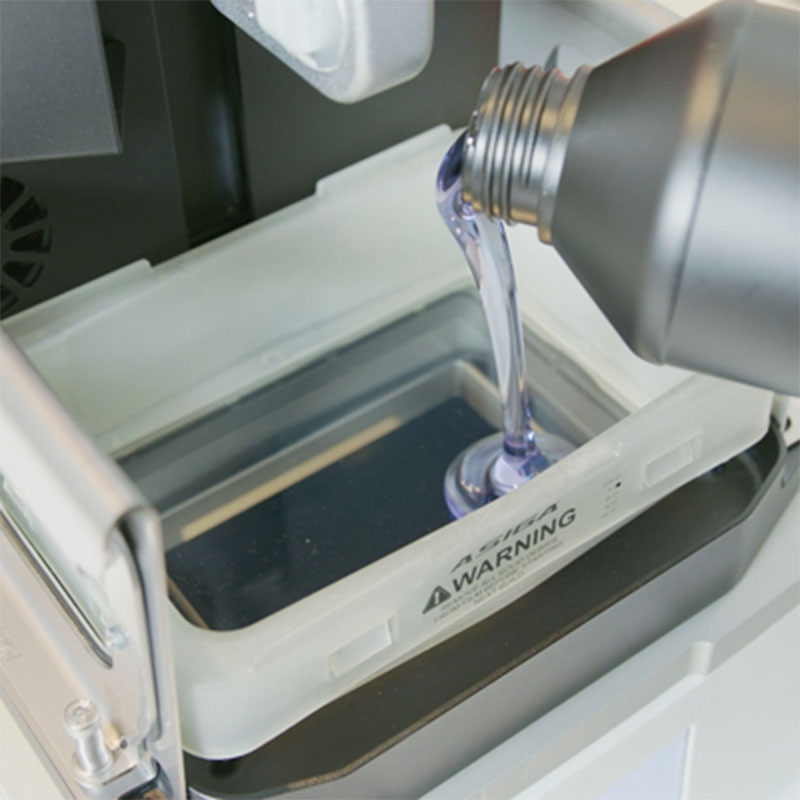
I’ve heard many bold claims over the course of my career. When I heard that Asiga was releasing a low-cost model material that’s both reliable and accurate, I had no choice but to test it while managing my expectations. What I discovered is that reliability and accuracy is exactly where Asiga DentaFORM Beige stands out as a new cornerstone of our material lineup. It is a high performance model material engineered for those who refuse to compromise on accuracy or durability. What I love most about DentaFORM Beige is its dual-purpose capability: it is expertly formulated to produce exceptionally detailed crown and bridge models, yet it possesses the heat resistance and anti-stick properties required for demanding thermoforming applications like Essix retainers, night guards, and gumshields. By integrating excellent dimensional stability with a surface that excels under pressure, this resin ensures that whether you are checking margins or vacuum-forming an appliance, you are achieving a reliable, clinical-grade result every time.
To test the material, I decided to run it through a series of various thermo formed appliance fabrications using scans of my own mouth from an iTero Lumina IOS using a Scheu MiniStar for accuracy.
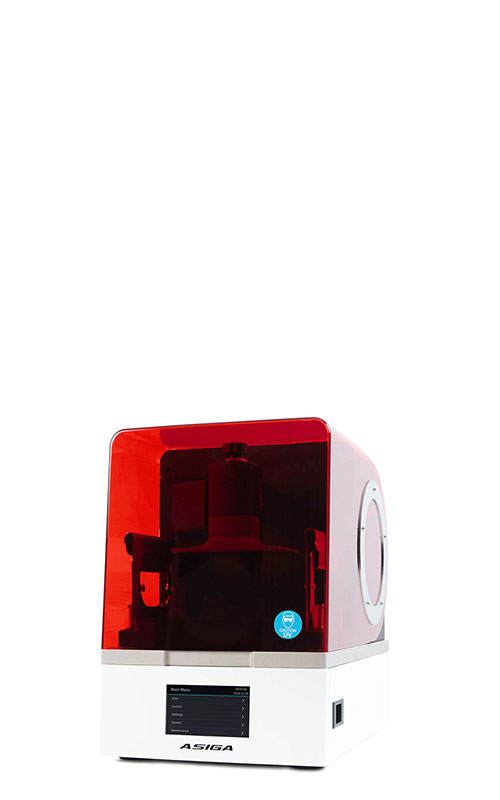
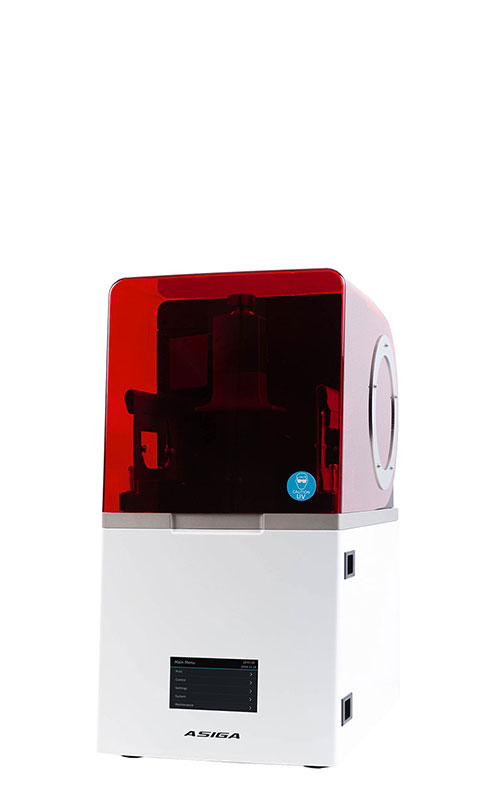
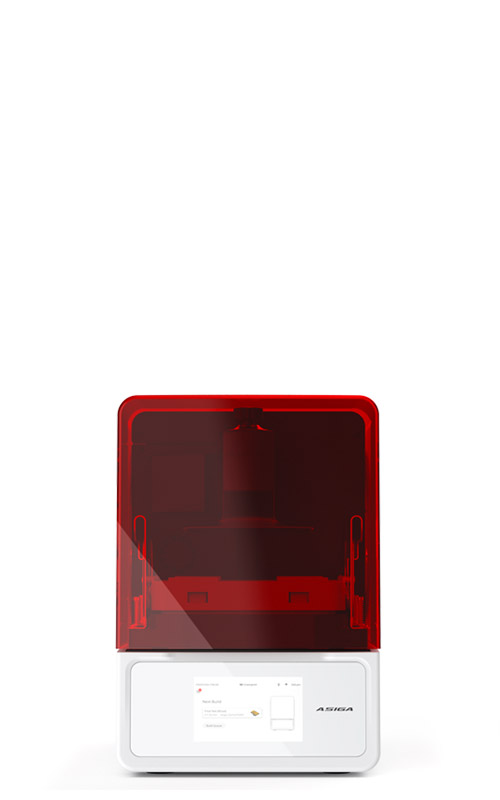
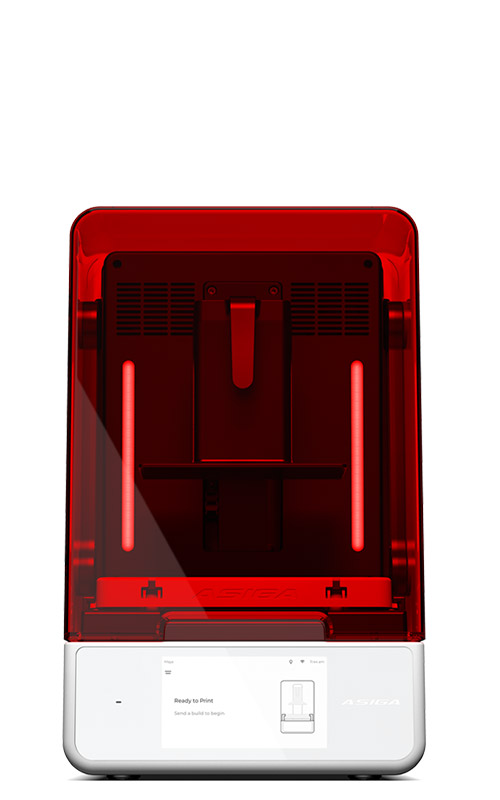
Firstly, I decided to print the models on one of our tried-and-tested Asiga Max printers with an Endurance tray at a 50nm layer thickness. I knew I wanted to obtain maximum accuracy of the appliance fit.
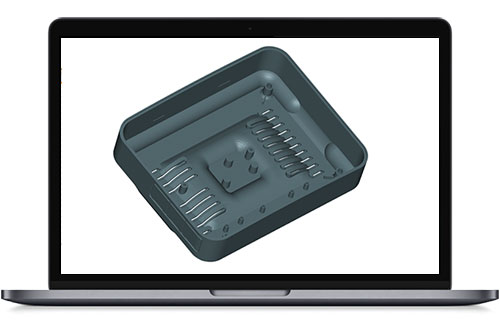
After trialling many other resins, I knew I needed to make the hollow models fairly thick to withstand the pressure of thermo forming. Because of this, I opted for 2.5mm thick hollow models with drain holes intermittently on base at 2.6mm from the base.
The models were quite straightforward to print using the material curing profile downloadable from the Asiga material library. The models were also easily removed from the build plate and washed in clean IPA 98% proof.
They were then allowed to dry for 20 minutes and placed within the Asiga Cure unit using the latest Cure program to post-cure.
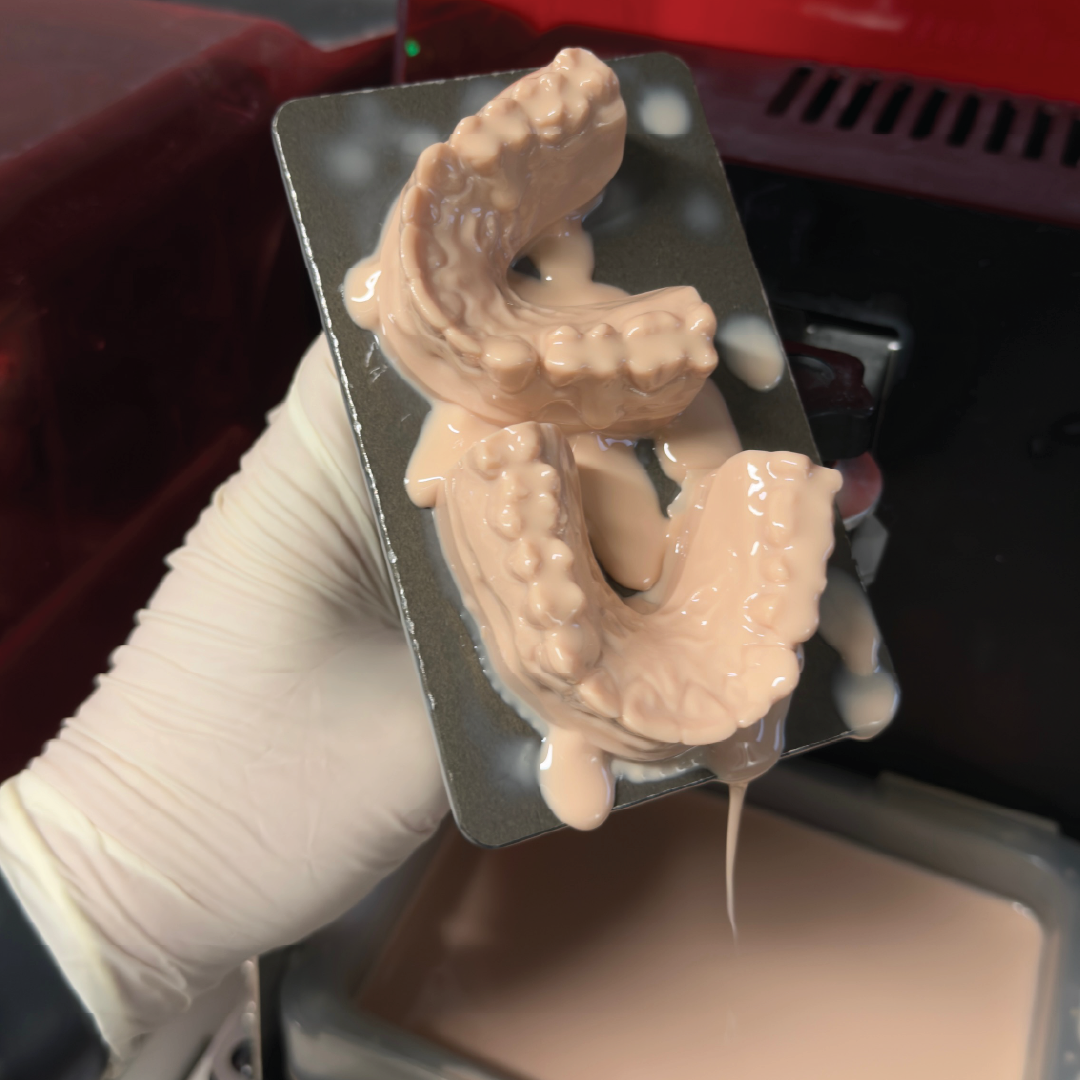
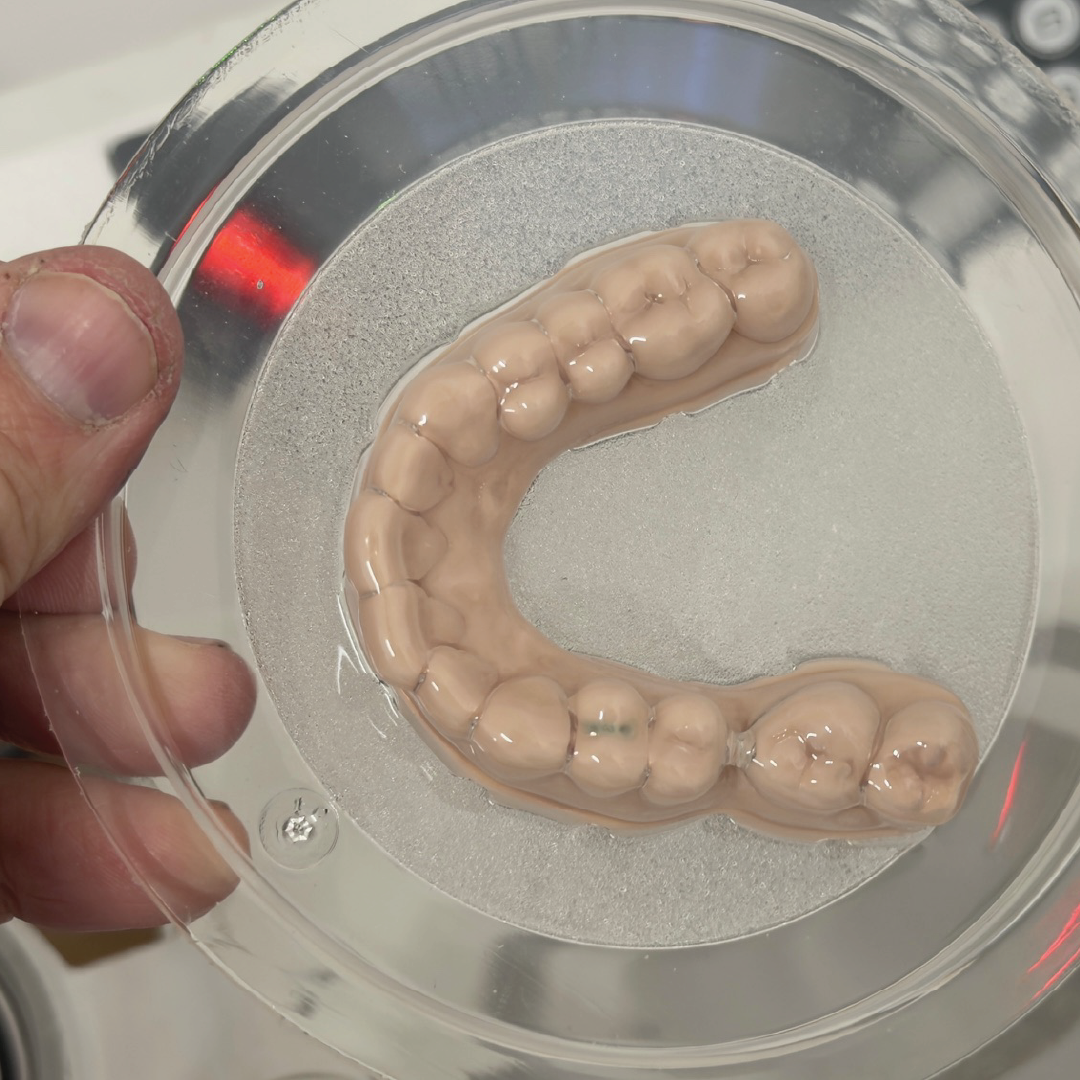
First impressions of the material was how tough it seemed. This is very critical, as in past I’ve seen models literally explode or collapse during the pressure of forming appliances. My confidence in the material was therefore increased. The surface was slightly shiny, which is the obvious non-stick ingredient. With other branded resins, I’d seen many appliances still stick to the model, and even once removed have a powder-like film to them.
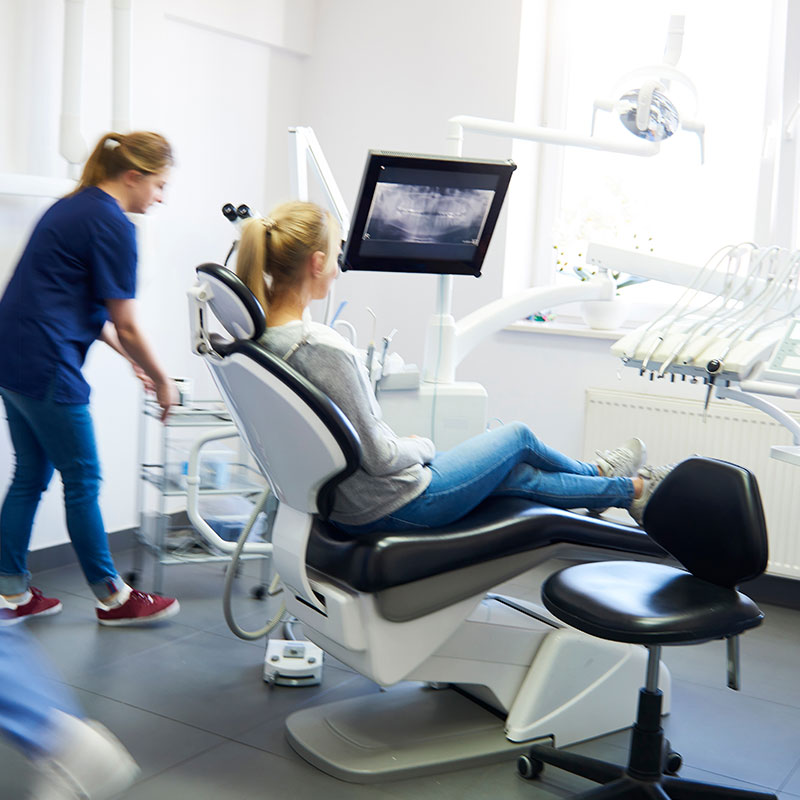
In total, 10 models were made of both arches to give me a control option to test appliance fit onto before inserting into my own mouth. This was certainly a leap of faith, but to me this is the only way to test resins for this purpose while ensuring an accurate and pain free appliance for patients.
The first appliance I decided to make was an Essix appliance at 1.5mm thick using Iconic brand blanks for quality assurance purposes. The model was placed in my Ministar thermo-former and the program started. When the time came, the heating element and the blank were turned over onto the DentaFORM Beige model and the seal closed as the pressure kicked in, pulling the blank tight onto the models surfaces. Typically, it is here where the resins tend to initially fail with a sound of cracking or a popping. With DentaFORM Beige, the models held up beautifully.
Upon opening the chamber, the Iconic blank looked to be tightly sealed against the model’s surface and upon closer inspection, this was the case with no creases or visible cracks.
The appliance was easily removed from the model with no need for cutting due to the non-stick properties with this material. It was then trimmed from the blank and processed to patient delivery precision. The moment of truth was here after cleaning the Essix thoroughly. It was at this point that the observation was made of how clear and clean the blank looked, almost glass-like. In the past, as mentioned earlier, we would usually have a cloudy clear effect, almost like frosted glass.
From this I could see the non-stick property and shiny polished like surface of the model had done its job.
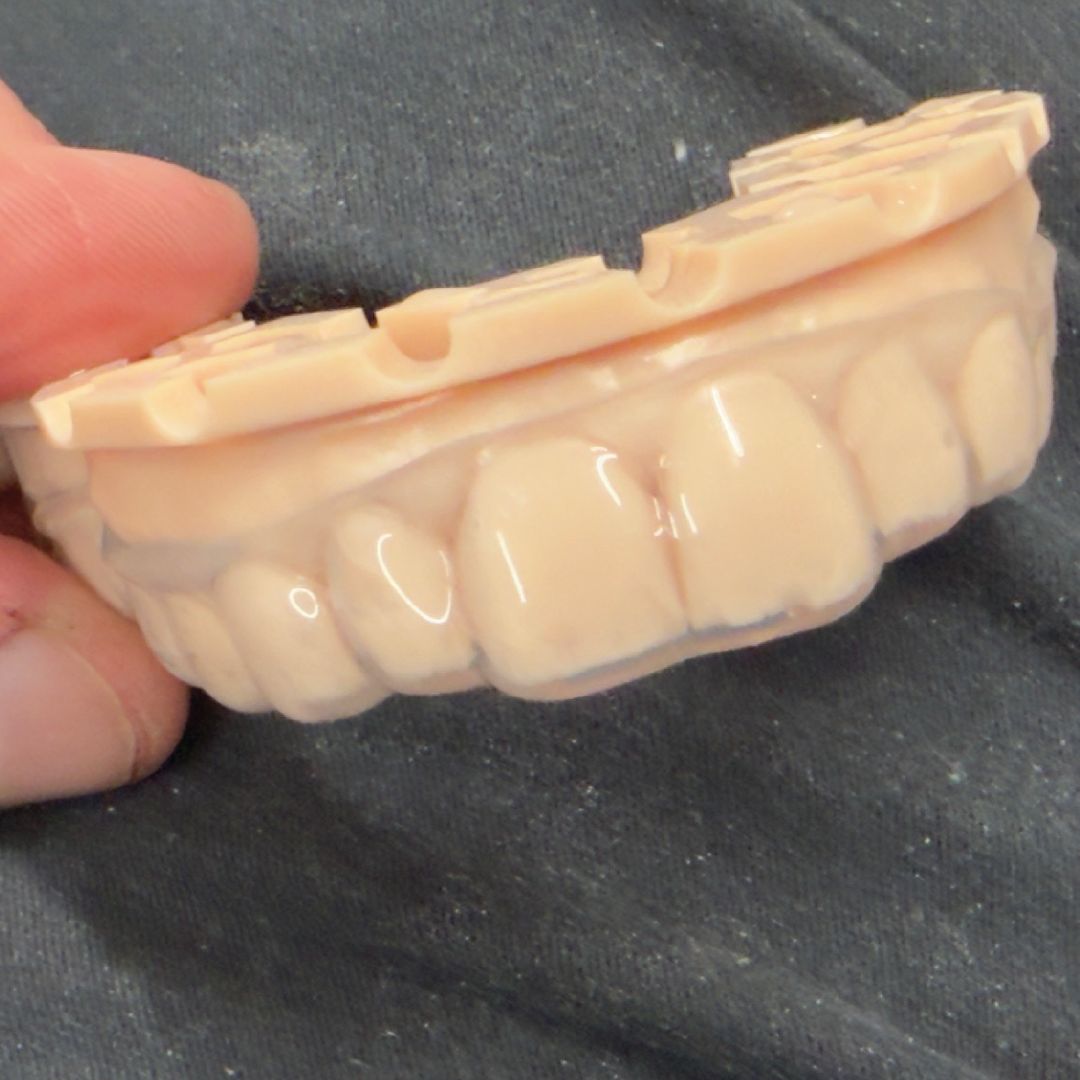
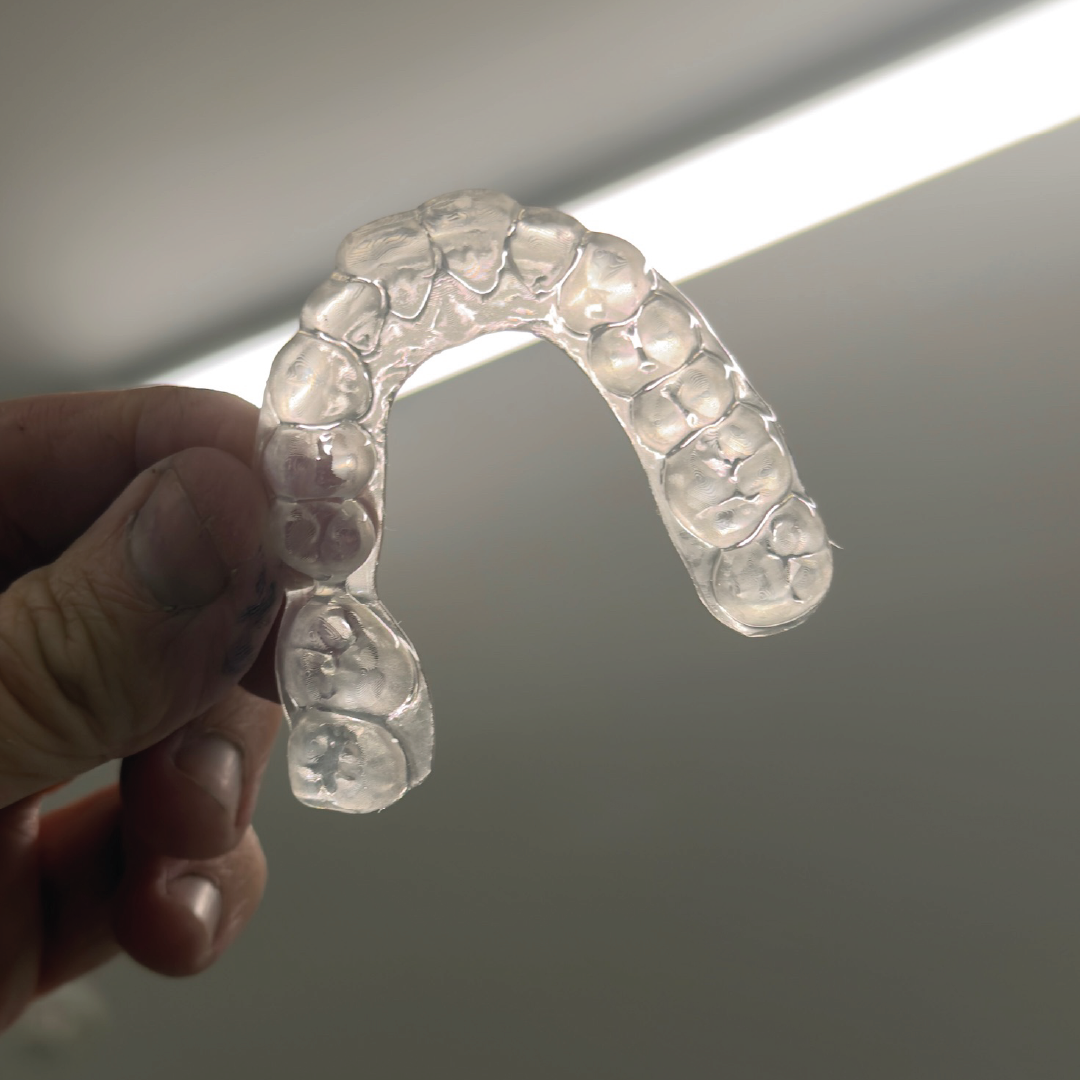
Finally, the Essix was placed into position within my mouth. And for probably the first time there was no real discomfort just a feeling of tight fit to my teeth. This was an excellent result, almost unexpected although I knew the Asiga brand wouldn’t fail me.
I then removed and cleaned the appliance and proceed to try it on the other models to see accuracy of the fit on them, which appeared to be incredibly precise, fitting on each of the ten models. The whole process was repeated using soft night guard iconic blanks as well as a 5mm yellow gum-shield. All of the appliances fitted with extreme accuracy and fine detailing of the models.
The results of this evaluation confirm that Asiga DentaFORM Beige successfully bridges the gap between cost-efficiency and clinical-grade reliability. By surviving the high-pressure environment of the MiniStar without cracking or surface failure, this material proves it can handle the physical rigours of a busy digital laboratory. The glass-like clarity of the final appliances and the high level of comfort during intra-oral fitting demonstrate that the non-stick properties and dimensional stability of the resin are not just marketing claims, but functional advantages. Ultimately, moving away from inconsistent resins in favour of a validated, dual-purpose material like DentaFORM Beige ensures that technicians can produce everything from crown and bridge models to complex thermoformed appliances with total confidence in their accuracy.
About the Author
Seasoned CAD/CAM expert Keith Morgan is founder and director of Digital Dental Laboratory Toothworx, based in Cardiff. Toothworx is a crown and bridge lab that offers the full spectrum of services; from bespoke single unit restorations to more specialist full contour implant retained work. It also offers an in-lab bespoke shade taking service.
Share: