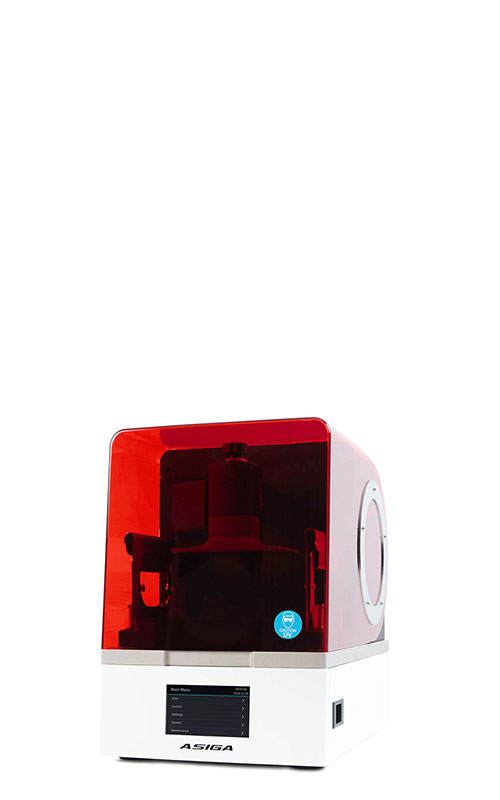
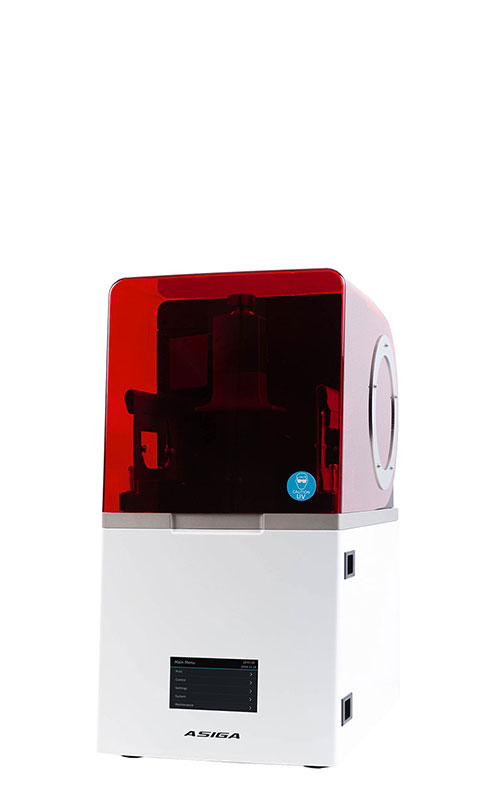
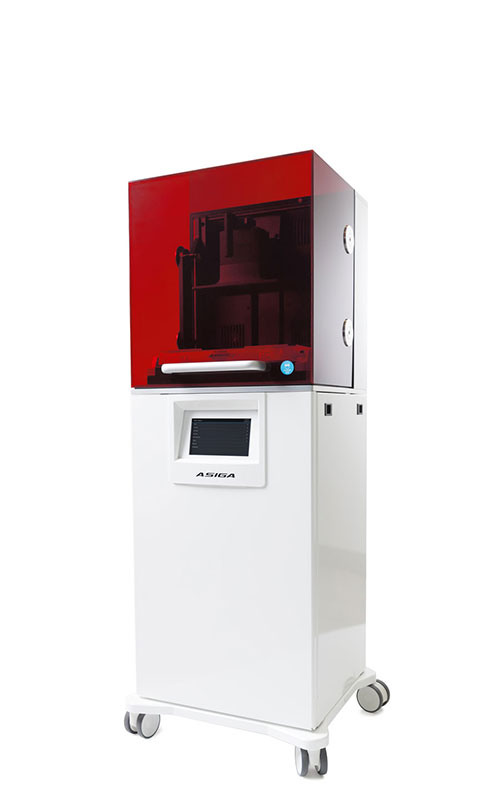
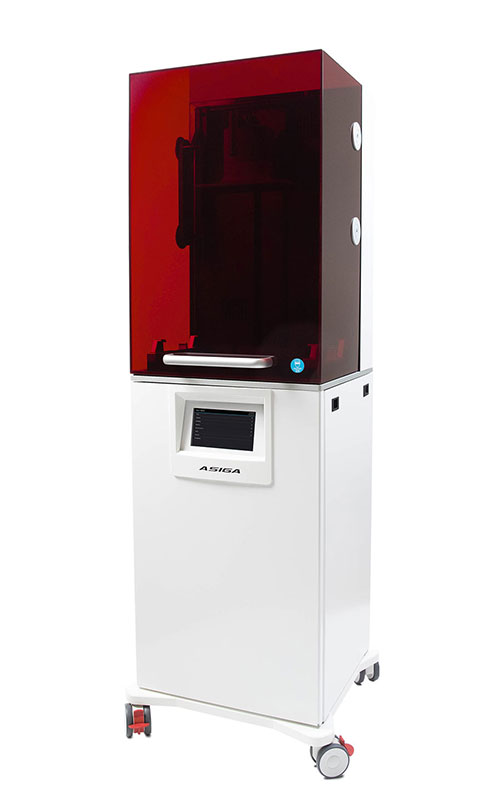
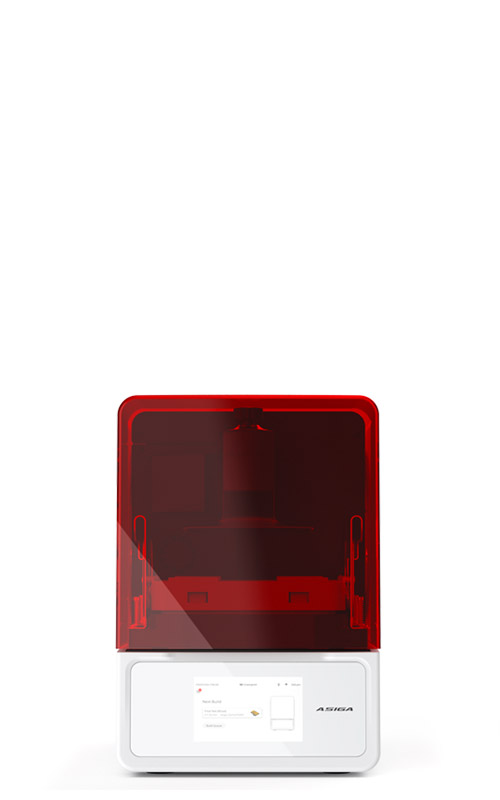

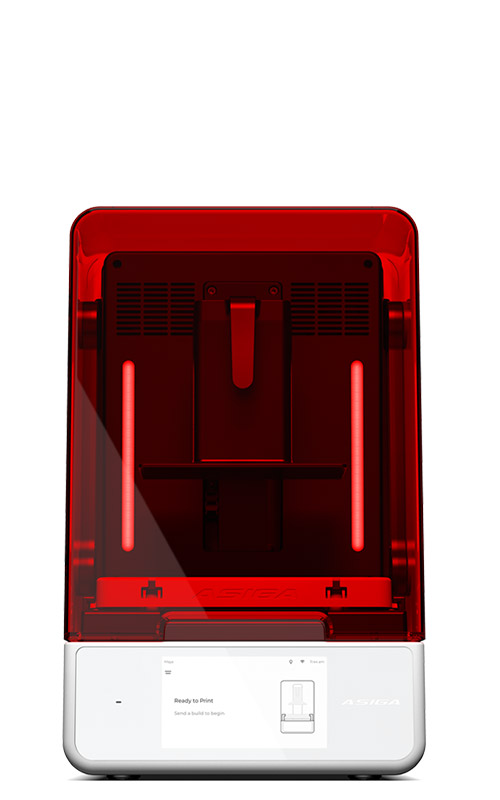
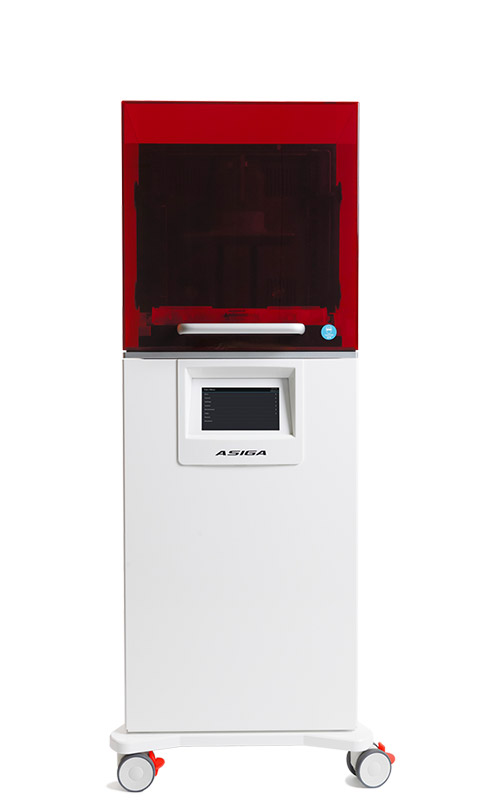
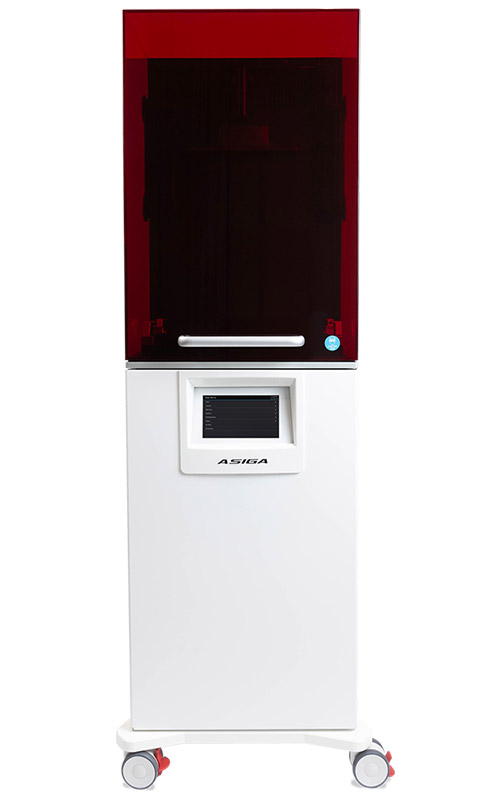












Asiga Cure ushers in a new era of post-processing

By Terry Whitty, FabDent

Introduction
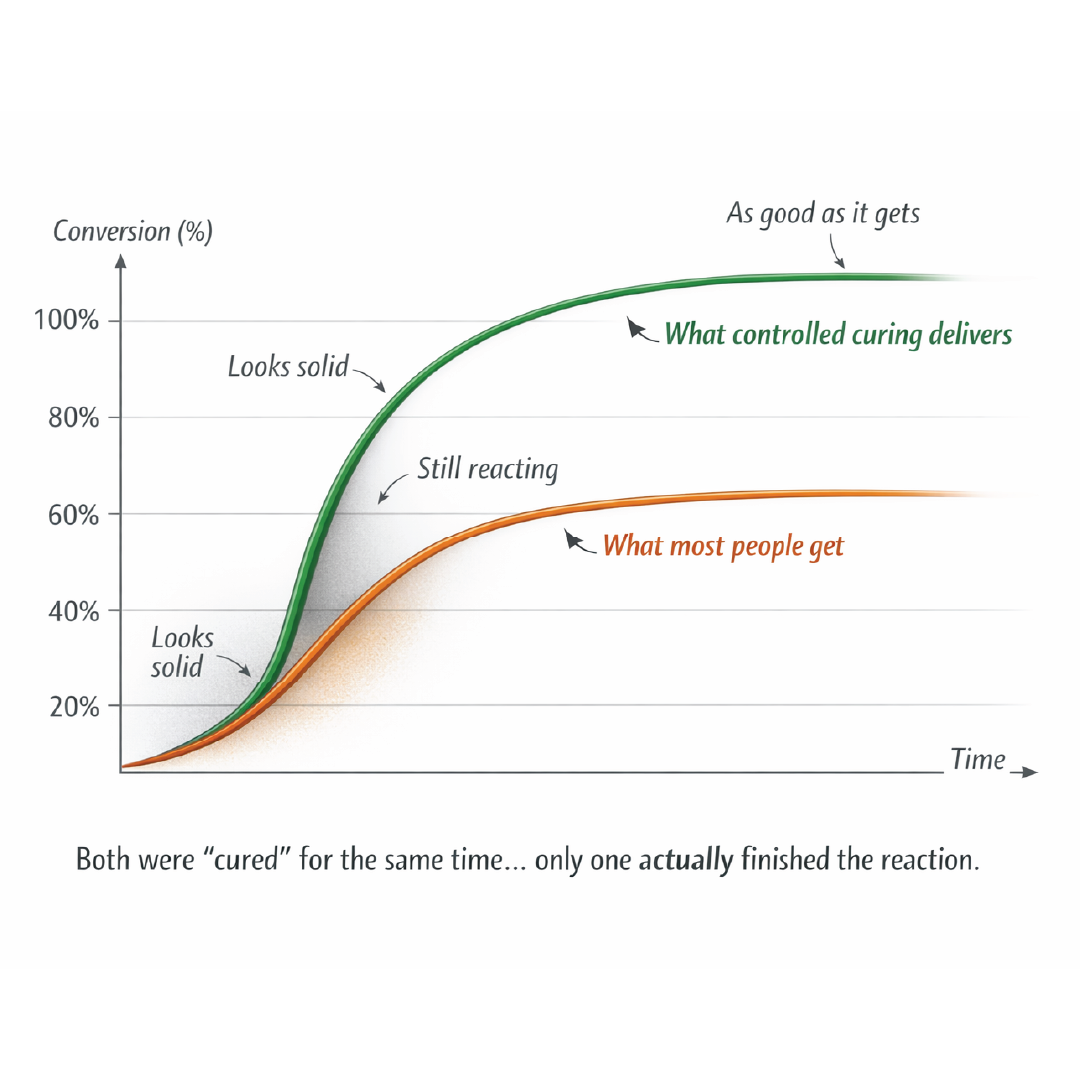
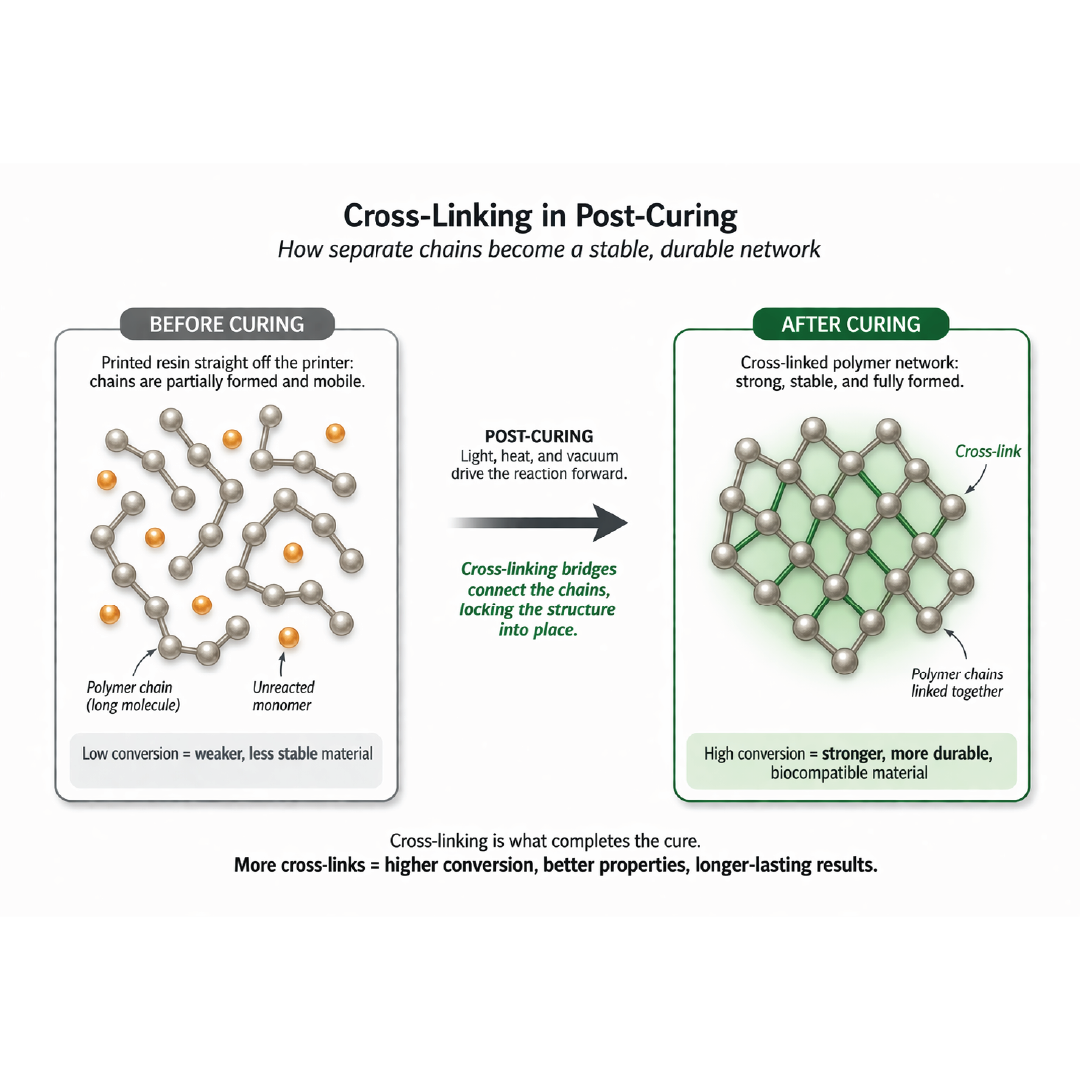
Most people think a 3D printed dental appliance is finished when it comes off the printer. It isn’t. What you’re holding at that point is a partially reacted material—a structure that looks complete, feels solid, but chemically is still very much a work in progress. The polymer chains have started forming, but there are still plenty of unreacted double bonds sitting there waiting to link up.
This is where a term gets thrown around a lot—conversion. Put simply, conversion is how much of that chemical reaction has actually happened.
If everything that could react has reacted, you’ve got full conversion. In reality, you never quite get there—but the closer you get, the better the material behaves. Low conversion means more unreacted monomer, a weaker structure and a material that is less stable over time. High conversion means improved strength, better wear resistance, more stable colour and—most importantly—a material that is far more suitable to sit in the tissues of the mouth. So when we talk about curing, what we’re really talking about is driving that conversion as far as possible. Post-curing is not drying it off under a light. It’s the continuation of the chemical reaction that actually finishes the material and that’s where most people have been getting it wrong.
The industry has spent years obsessing over printers—resolution, layer thickness, build angles—while treating curing like it’s a toaster. Put it in, wait a bit, pull it out… job done. But it’s not job done. If the chemistry isn’t finished, the material isn’t completely stable. Simple as that. If that sounds obvious, it’s only obvious once you understand it. For a long time, people simply didn’t think about curing in chemical terms. It was seen as a finishing step, not a defining step. This becomes a real issue once you move into biocompatible resins. These materials are more demanding. They are less forgiving. And they rely heavily on proper curing to achieve the properties they claim to have. Get that wrong, and you’re left with residual monomer, incomplete conversion and a surface that might look fine but behaves very differently over time.
The big issue is — you often don’t see it straight away. It shows up later as irritation, surface breakdown or discolouration. By then, the printer, the design or the material has already been blamed… when in reality the issue was sitting in the curing unit all along. There’s also a psychological trap here. If something looks good, we assume it is good. Smooth surface, nice colour, no obvious defects—must be fine. It’s not. Polymer chemistry doesn’t care how something looks. It only cares how
complete the reaction is. Now we get to the part no one explains properly—the oxygen inhibition layer.
Oxygen Inhibition Layer
Oxygen interferes with polymerisation. It reacts with the free radicals that are trying to drive the reaction and effectively shuts it down at the surface. The result is a thin outer layer that is under-cured compared to the rest of the object. So you end up with something that is reasonably cured internally, but
compromised exactly where it matters most—on the surface. That’s where you get the sticky feel, poorer polish, increased wear and higher levels of residual monomer sitting right where the material contacts human tissue.
Most curing units just blast light at prints in open air and hope for the best. That’s like painting a car in a dust storm and wondering why the finish isn’t great. There are only two real ways to deal with oxygen—push it out with nitrogen or remove it altogether with vacuum.
Nitrogen works. It displaces oxygen and improves the surface cure. But it relies on a consistent gas supply and a system that’s set up properly. In the real world, that consistency can be hit and miss. Bottles run low, flow rates vary, seals aren’t perfect—little things that all add up. And there is a cost for the gas itself. Vacuum takes a more direct approach. It removes oxygen from the environment entirely. No oxygen, no inhibition. The reaction is free to proceed properly, right through to the surface. Once you understand all of that, you start to look at curing units very differently. They’re not light boxes.
They’re reaction chambers!
The New Asiga Cure
This is where the new Asiga Cure unit starts to separate itself. It’s designed to control the variables that actually drive conversion, not just shine light and hope for the best. Take dose, for example. Most people think in terms of time—leave it in for 10 minutes and she’ll be right. But polymerisation doesn’t run on a stopwatch. It runs on energy delivered over time. The Asiga Cure introduces controlled dosing. In simple terms, it’s not just how long you cure—it’s how much energy the material actually receives. That’s a completely different level of control and it brings curing much closer to something measurable and repeatable.
No more guessing whether enough energy has been delivered. You know. Timing is still there, but now it actually means something. Not just longer equals better; over-curing has its own issues—brittleness, distortion, internal stress. So now we’re not just curing… we’re curing appropriately for the material. Then there’s vacuum.
Curing Under Vacuum
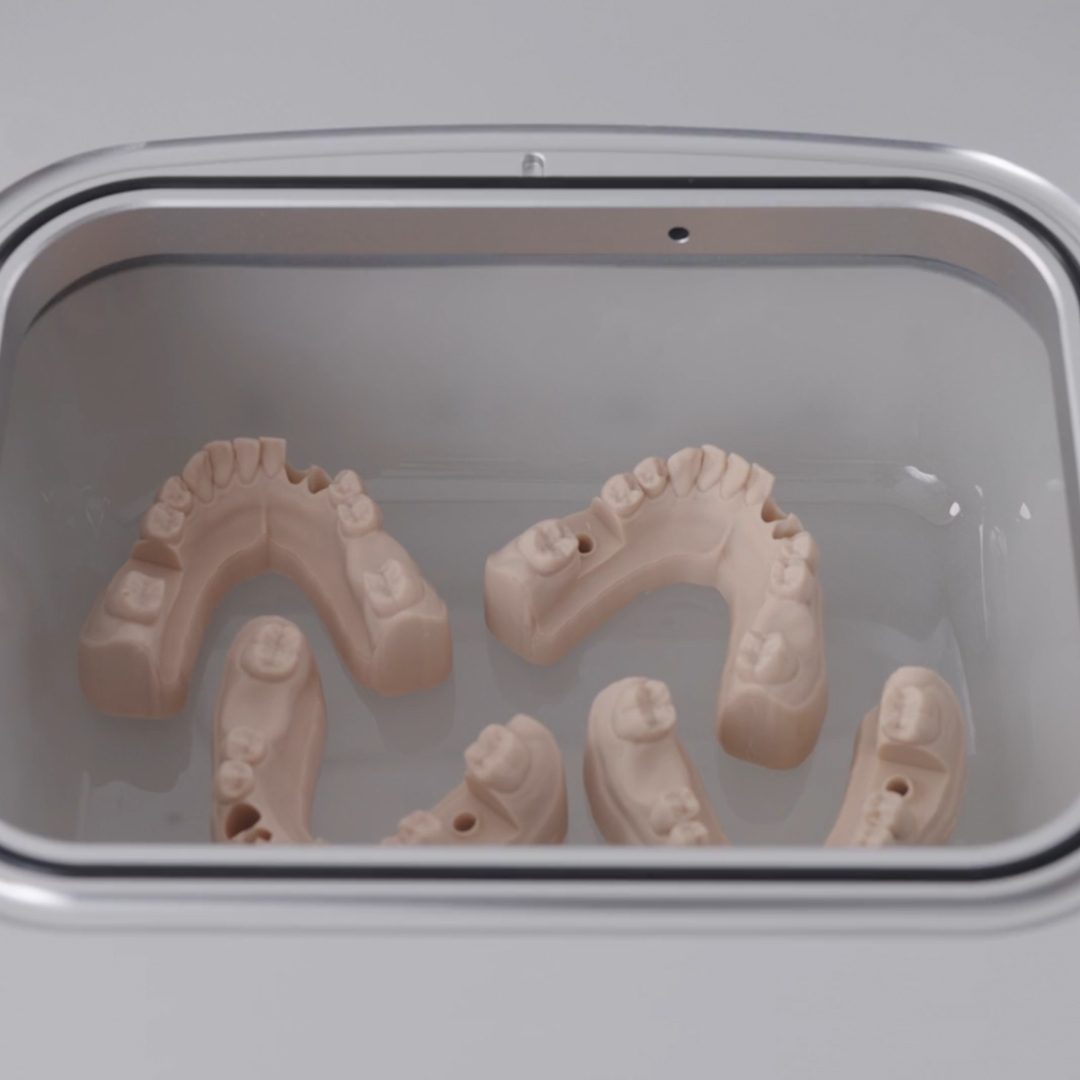
Once you remove oxygen from the equation, surface conversion improves dramatically. The material cures properly throughout, including the
outer layer. You get a harder, more stable surface that polishes better, wears better and behaves more predictably over time. More importantly, you get consistency. The same result today, tomorrow and next week. Not “it seemed better this time,” but actually better everytime.
Nitrogen is also part of the system and it has its place. It’s another way of managing oxygen, and in certain workflows, it’s effective. What matters is that the environment is controlled, not left to chance. That’s really the underlying
theme here—control.
The Effect of Heat
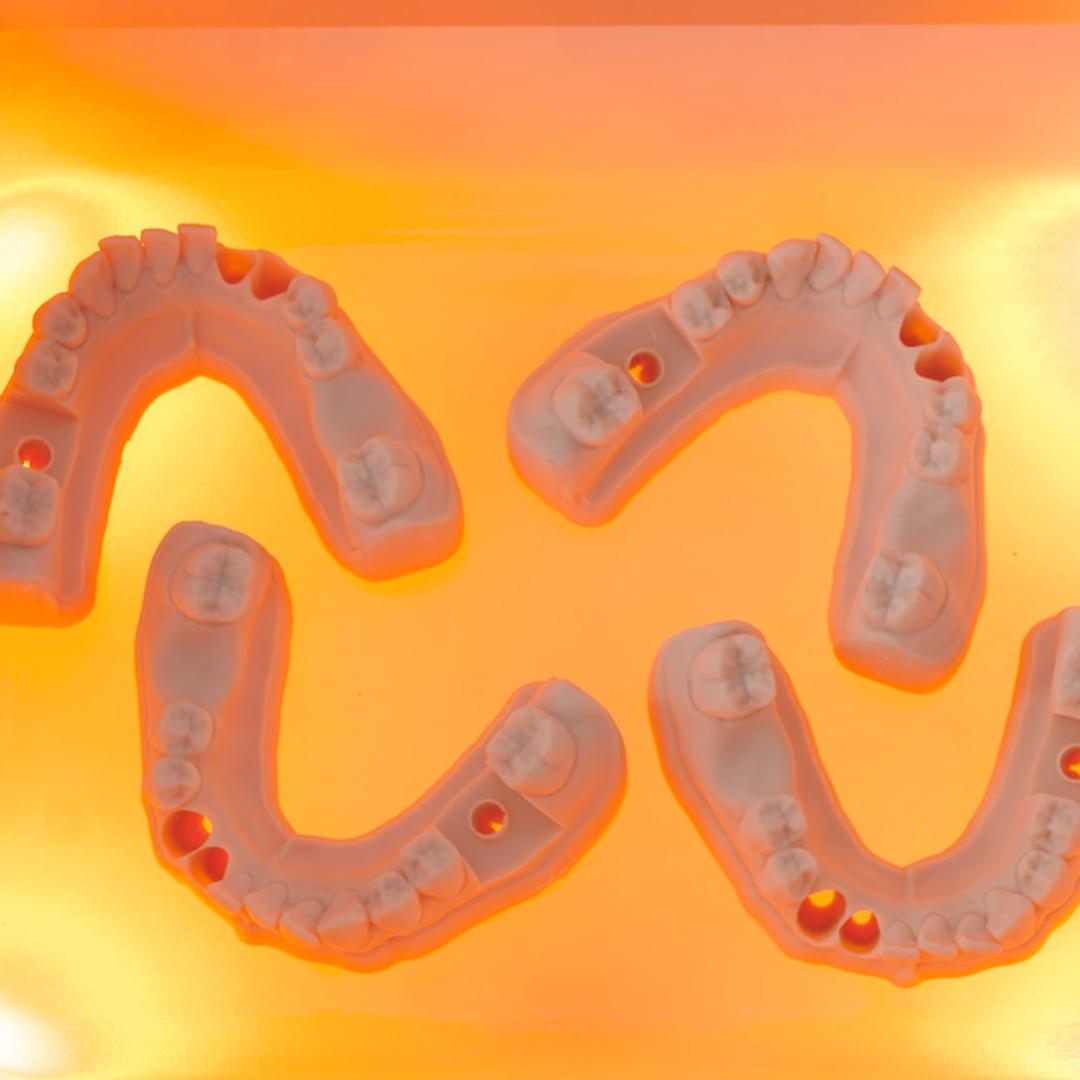
Heat is still one of the most misunderstood parts of the process. Heat increases molecular mobility, allowing remaining reactive sites to find each other and link up. In other words, it helps drive conversion further. Without heat, you’re relying heavily on light alone. With it, you’re finishing the reaction properly. Again, with Asiga Cure, it’s controlled— not just added in as an afterthought, not just whatever heat happens to build up, but a deliberate, consistent part of the process. You start to see a pattern here. Nothing is left to chance.
Validation
One of the more important aspects in the curing process is validation. Anyone can build a box with lights, a heater and a pump. That’s not the hard part. The hard part is knowing that when you run a cycle, the material actually reaches the level of conversion it’s supposed to. That it performs as expected. That it meets its intended use. That’s where validated curing profiles come in. Not guesses. Not “this seems to work”. Actual, tested workflows tied to specific individual materials. So when you run a cycle, you’re not experimenting—you’re following a known pathway to a known outcome. It’s exactly where this is all heading. Because once you’re dealing with medical devices—and that’s exactly what these are—you can’t rely on opinion. You need consistency. You need repeatability. You need a process you can stand behind. Regulation is driving it. Manufacturers will demand it. Clinicians and patients will start expecting it. Then quietly, the market will shift.
The Asiga Cure isn’t just a better curing unit—it represents a more complete way of thinking about curing. Control the dose. Control the environment. Control the temperature. Validate the outcome. Once you work like that for a while, it becomes very hard to go back to throwing parts into a generic light box and hoping for the best. Because you start to realise something slightly uncomfortable… A lot of the problems people blame on printers, materials or design… …were never coming from there in the first place. They were being introduced at the very last step. This is exacly the part no one wanted to look at.
What’s interesting is that once you see it, you can’t unsee it. You start questioning everything—why does this material behave differently, why does that one polish better, why does one discolour and another doesn’t. And more often than not, the answer comes back to the same place… How well was it actually cured? That question is going to become more important, not less. Because as materials improve, tolerances tighten and expectations increase, the margin for error gets smaller. You can’t afford to be approximate anymore. You either finish the chemistry… or you don’t.

Conclusion
Finally, a company has actually stopped and thought this through—not just how to build a curing unit, but how curing really works. Not a light box, not a guess, but a properly controlled system that gives you control over everything that matters and removes the guesswork that’s been floating around this space for years. It delivers everything you could want in a curing unit and more importantly, it aligns with where the industry is going.
This isn’t just a better way to cure—it’s a more responsible way to work. As materials become more advanced and expectations around performance and biocompatibility continue to rise, systems like this won’t be seen as premium—they’ll be seen as necessary. And that’s the shift. The Asiga Cure doesn’t just fit into the current workflow—it points to what the workflow is becoming. Controlled. Measured. Validated. Like it or not, that’s where this is all heading. Units like the Asiga Cure won’t just be part of that future… They’ll define it.
About the Author
Terence Whitty is a well-known dental technology key opinion leader and lectures nationally and internationally on a variety of dental technology and material science subjects. He is the founder and owner of Fabdent, a busy dental laboratory in Sydney specialising in high tech manufacturing. Using the latest advances in intra- and extra-oral scanning, CAD/CAM, milling, grinding and 3D printing, most specialties are covered including ortho, fixed and removable prosthetics, computerised implant planning and guidance, TMD, sleep appliances and paediatrics.
Share: