












DentaFORM Beige for advanced dental applications

By Federico Milano, DPZero
Introduction
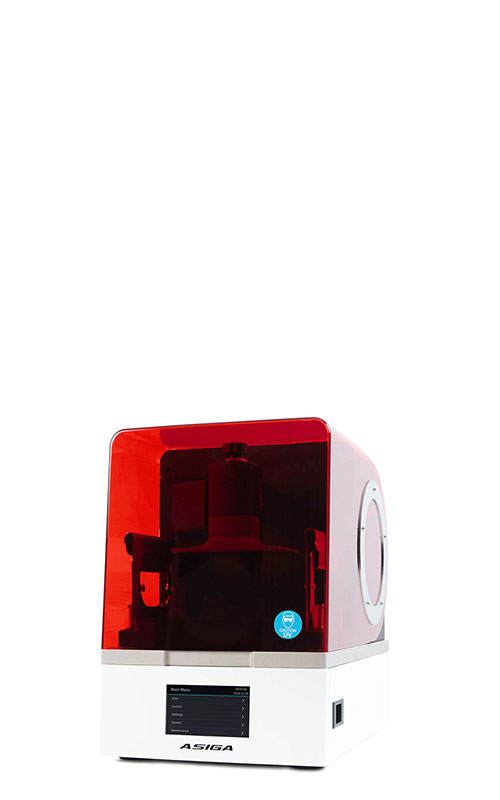
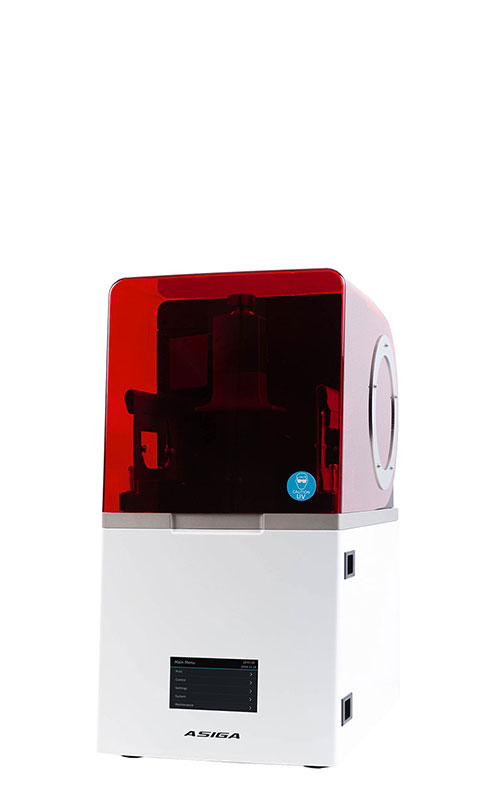
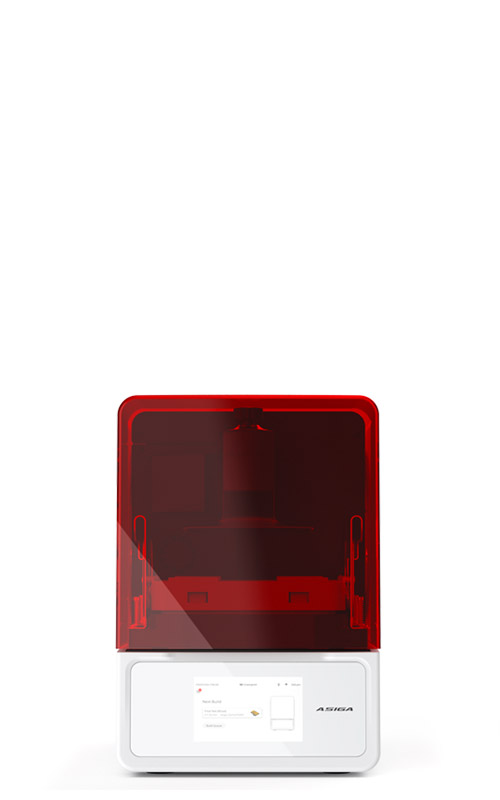
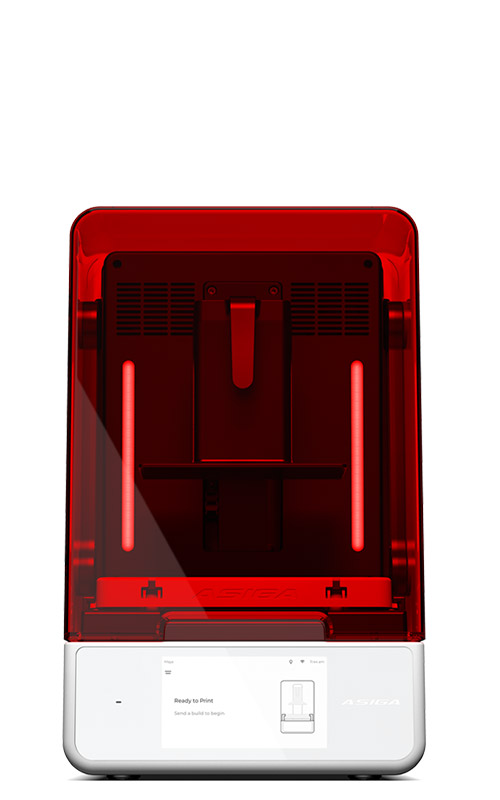
In recent years, the dental technology sector has undergone a profound transformation, driven by the evolution of materials and digital technologies. 3D printing, once considered a niche solution, has today become one of the core production pillars of the most advanced laboratories. In this context, not all materials behave the same way: some simply work, others manage to solve real, everyday problems, which rarely appear in technical data sheets yet make all the difference in daily production. After more than twenty-five years of direct laboratory experience and after evaluating dozens of resins under industrial conditions, I have learned to recognise this difference. Asiga DentaFORM Beige clearly falls into the second category. The test carried out at my laboratory, on an Asiga MAX UV printer integrated into our fully digital CAD/CAM workflow, is the concrete demonstration of this.
The Real Challenge:
Workflow and Dental Precision
The paradigm shift that separates an advanced digital laboratory from a traditional one lies not only in the machines or the software, but also in the ability to produce repeatable results at industrial scale, batch after batch, operator after operator. In this context, the choice of material for dental models becomes a strategic decision, not a commodity.
I built this test around a precise challenge: to produce different types of restorations in a single print cycle, each with different geometric and dimensional requirements, and to verify that all of them met clinical tolerances without any manual corrective intervention. This is exactly the kind of stress test that distinguishes a material suited for industrial production from one that performs well only under ideal conditions.
CAD Design:
The Foundation of the Result
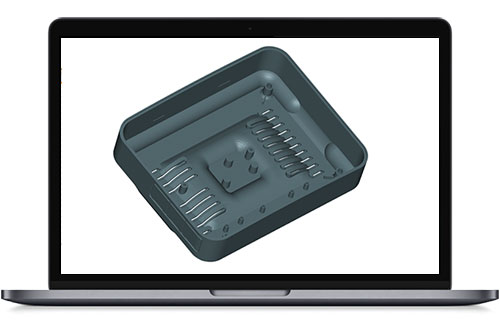
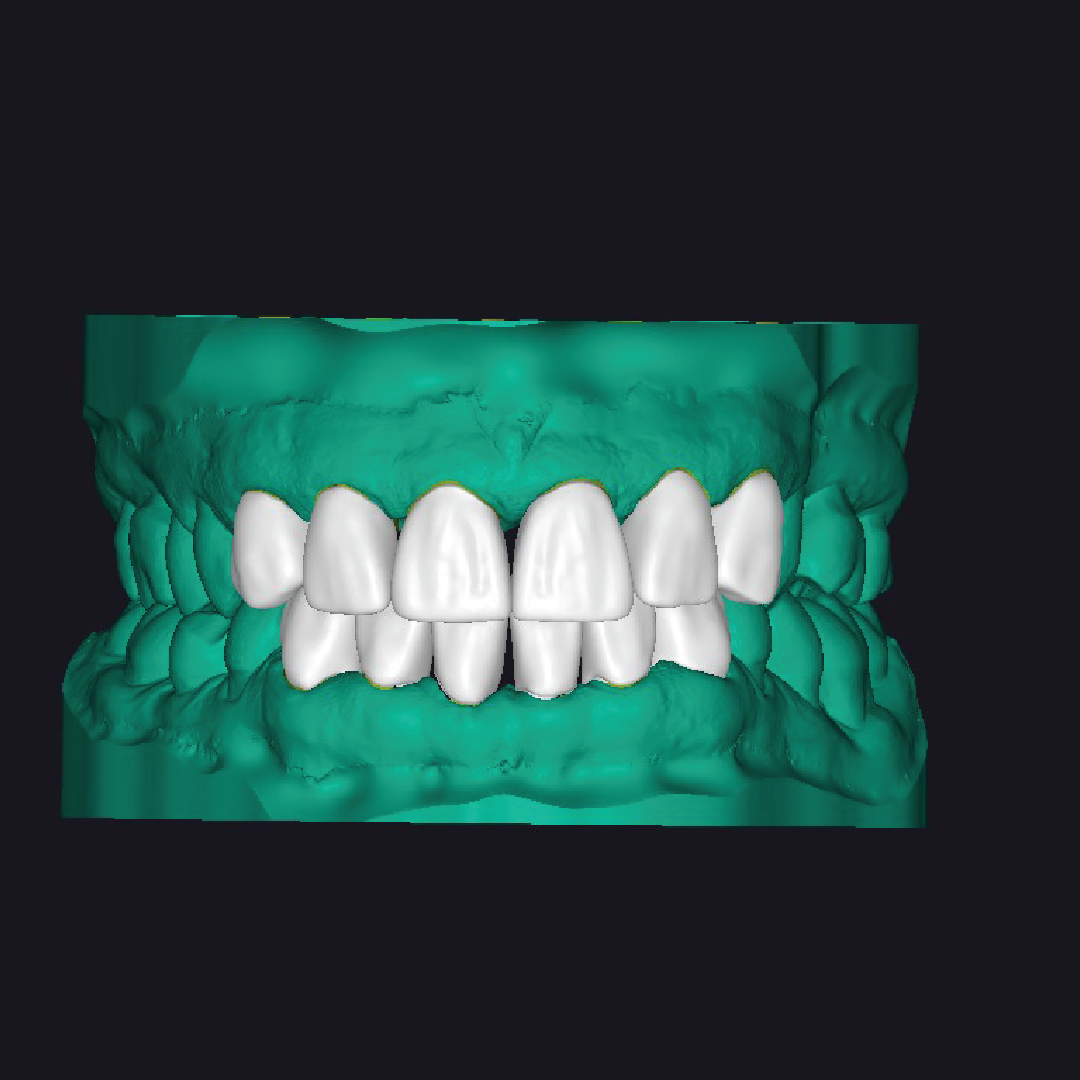
Model design represented the first proving ground. For each arch, hollow internal geometries were created with calibrated wall thickness to ensure structural rigidity while keeping resin consumption optimised — a decisive factor in an industrial production context where unit cost directly impacts laboratory margins.
The test batch simultaneously included five types of restorations:
Upper and lower implant models with circular analogue seats, design tolerance ±0.05 mm on seat diameter. Removable dies with central pin, optimised for printing with a single support. Artex Print&Click bases for the Amann Girrbach ARTEX articulator, with a planar stop surface and rotational locking system. Toronto bridge frameworks with digital simulation of the screw-retained prosthesis fit, verified for margin/gingiva correspondence before printing. Study models for diagnostic use and communication with the clinician using the X-SNAP articulator
Before transferring to the slicing software, each model was subjected to automated geometric verification: mesh closure, absence of inverted normals, interference check between removable components and their respective seats. The digital simulation of the Toronto bridge allowed detection and correction of a minor interference in the posterior gingival relief area before initiating the print — an advantage impossible to replicate with conventional processes.
Slicing and Support Strategy
Asiga Composer software manages file preparation using the certified DentaFORM profile: 100 µm layers in standard mode (50 µm option for ultra-high-resolution applications) pre-validated exposure parameters from the manufacturer, and automatic management of platform adhesion layers with reinforced burn-in parameters.
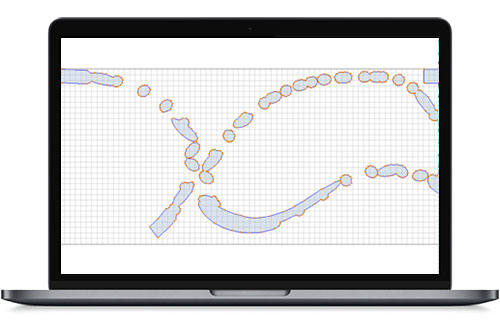
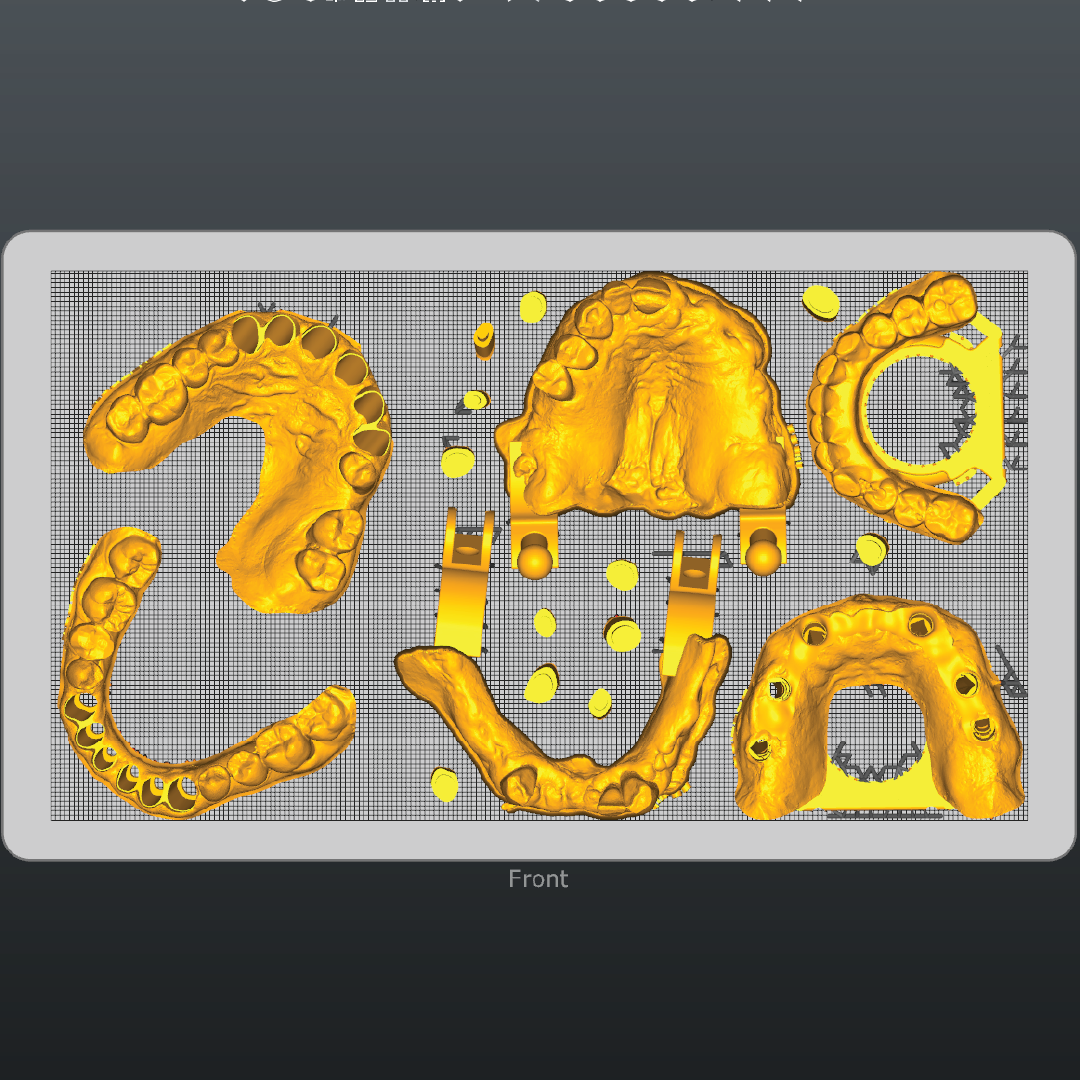
For dental models, the choice of support type is critical. Supports that are too robust make removal difficult, risking damage to gingival surfaces; supports that are too light can cause delamination during printing. The Lattice structure available in Asiga Composer represents the optimal solution: a low-density three-dimensional lattice that uniformly distributes peel forces without concentrating localised stresses.
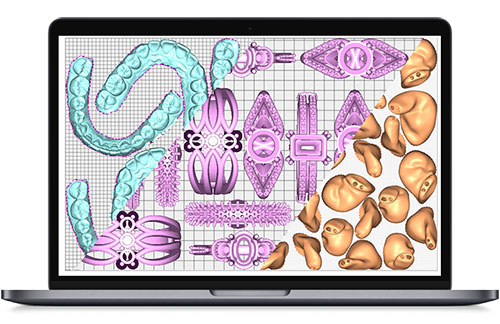
Model placement on the platform was optimised to maximise production density without compromising quality. The final batch included: 1 upper arch with implant seats, 2 arches with removable dies, 2 arches with X-Snap system, 2 arches with Artex Print&Click base, all different types produced in a single cycle.
This aspect is of strategic importance in an industrial context: not having to empirically develop print parameters means being able to replicate results on any Asiga printer, at any production site, without process variables dependent on the operator or location.
Post-Processing:
Protocols and Critical Details
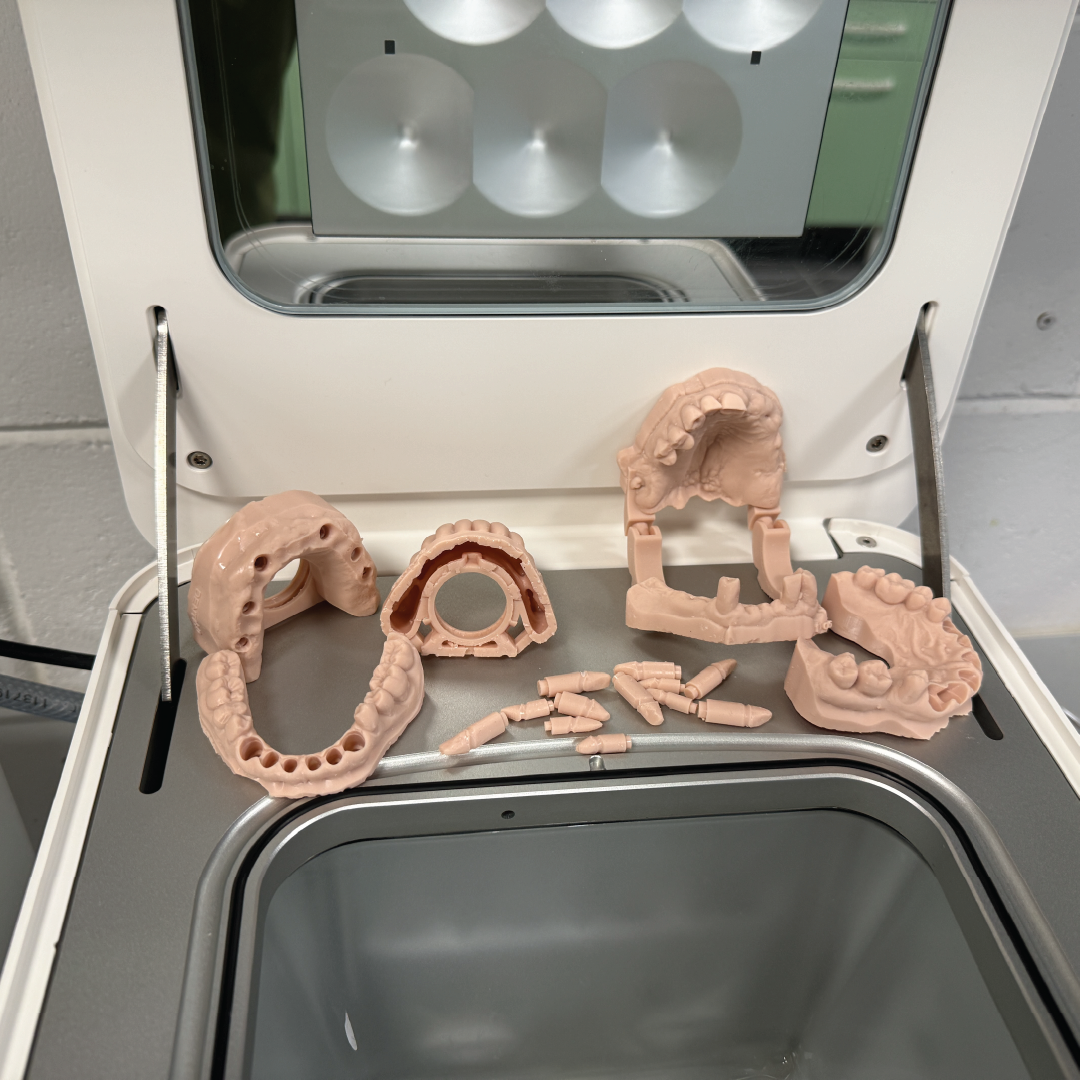
At the end of the print cycle, models are manually removed from the platform using a lateral-angle metal spatula. The adhesion quality of DentaFORM to the platform proved optimal. It was sufficient to guarantee stability during printing, without creating difficulties in detachment.
Washing takes place in a dedicated station with IPA, in two phases: first, an agitated immersion to remove excess resin from external surfaces, then a second wash in fresh IPA for the internal areas (implant seats and removable die channels). A critical point that is often overlooked concerns hollow geometries Uncured resin retained in internal cavities can cause delayed polymerisation that alters seat dimensions. The protocol includes the use of pressurised compressed air to expel residual resin from cavities before the final wash, followed by thorough drying.
Final curing takes place in the Asiga Cure chamber using the specific cycle for DentaFORM Beige. The chamber guarantees uniform exposure from all directions, eliminating polymerisation gradients that would cause post-curing dimensional deformations. Correctly cured models present a low-gloss and hard surface, with a uniform beige colour across the entire surface. 100% of the batch items passed visual inspection under raking light without the need for any corrective intervention.
Implant Precision - The Most Critical Step
The precision of implant analogue seats is the parameter that separates a model resin from a generic consumable. A clearance greater than 0.1 mm between the seat and the analogue makes it impossible to build a prosthetic framework with adequate passive fit. Clinical consequences manifest as stress-related peri-implantitis or fracture of the connecting screws in the long term.
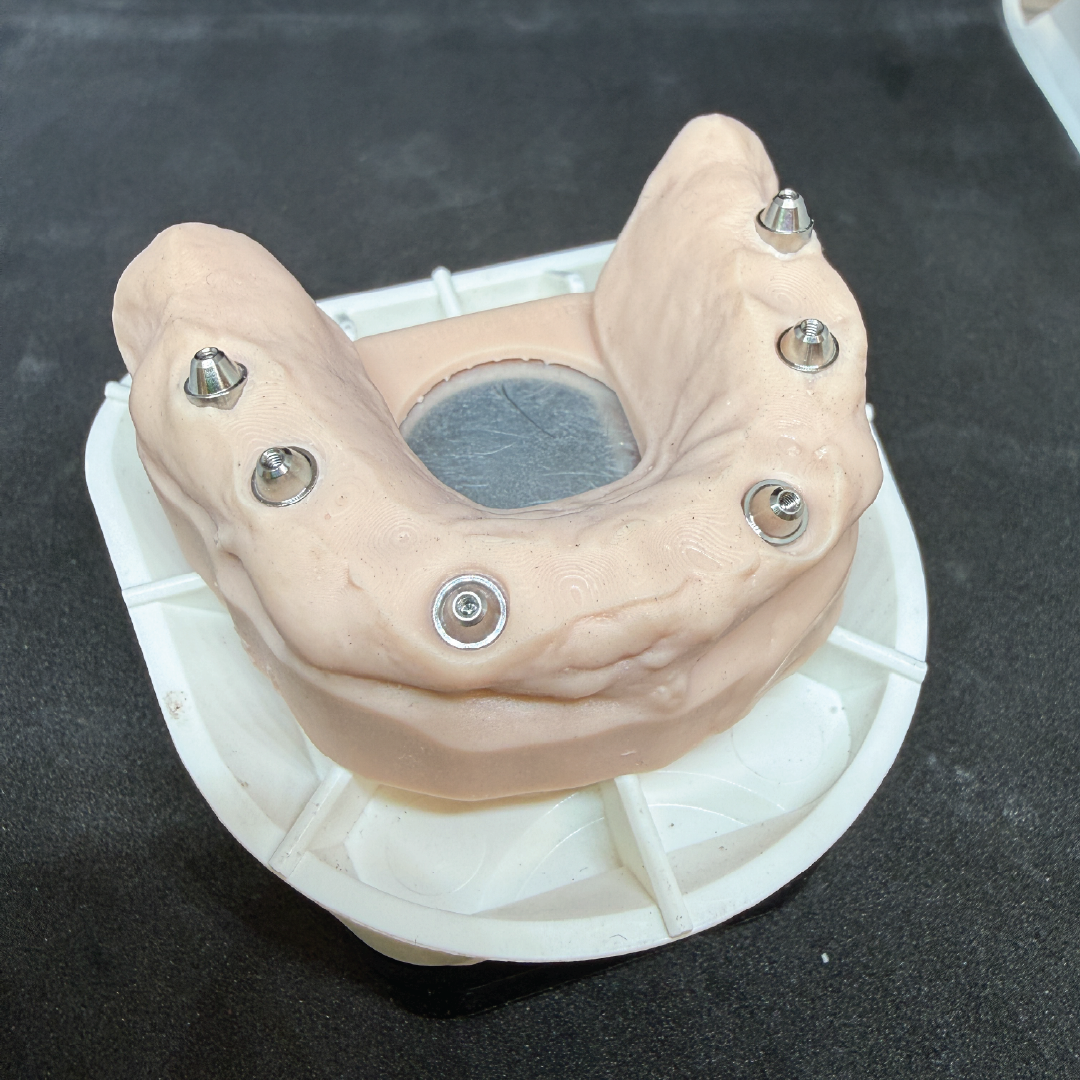
Verification was structured in three progressive phases. First, manual insertion of implant analogues into the printed seats. The tactile feedback must be one of controlled and progressive resistance, without lateral play and without excessive force. Second, visual gap verification under raking light on the model positioned on a flat surface. There must be no visible gap between the analogue and the seat wall. Third, functional verification with frameworks placed on the model with abutments. Visual and tactile passive fit on all pillars is key.
The precise coupling without evident play between analogues and seats, combined with correct mounting on the Amann Girrbach ARTEX articulator, confirms that DentaFORM Beige maintains the dimensional tolerances of the CAD design within clinically acceptable limits. A further distinguishing element of this resin is its delayed dimensional stability. No variations are observed in the hours following curing, which is a known phenomenon with certain alternative materials that compromises implant precision even on initially accurate models.
Removable Dies, X-SNAP System and ARTEX Print&Click
Removable Dies
Removable dies simultaneously require rigidity and coupling precision, two apparently contradictory requirements. Operational tolerances are in the range of ±0.05–0.08 mm on the pin diameter: above this, the die oscillates in its seat; below, it locks and risks breaking during removal. The technical innovation of the batch was the production with a single support pin positioned on the occlusal edge, made possible by the combination of pin geometry, the Low Force vat, and the DentaFORM material profile optimised to minimise deformations during curing.
All dies in the batch showed insertion and removal with calibrated force, without oscillation, with homogeneous surface quality. Interchangeability between dies of the same type (verified by substituting pieces with one another) confirmed intra-batch dimensional consistency. Sliding surfaces were found to be free of imperfections from supports or print artefacts.
X-Snap Lite System and Artex Print&Click
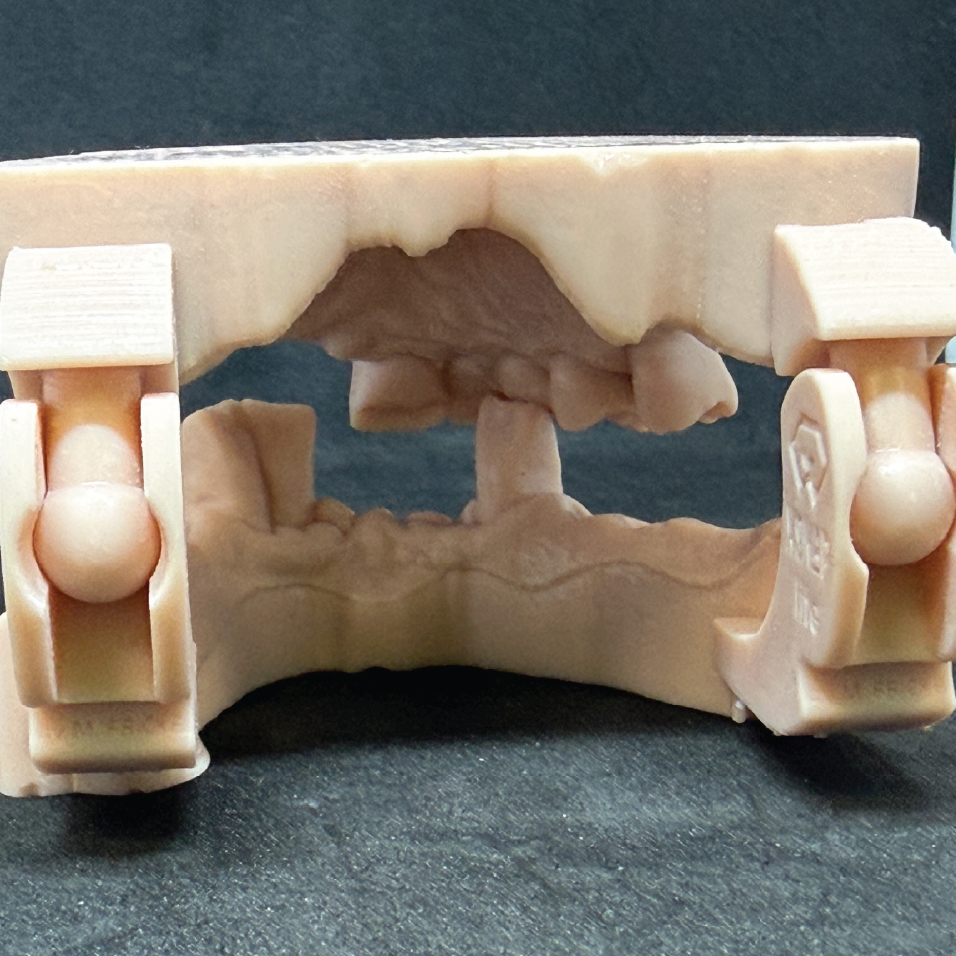
The test with the X-Snap Lite system and Artex Print&Click bases put the DLP system resolution to the test on complex geometries: 0.4 mm nominal reinforcement ribs, clip-lock mechanisms, insertion slides, and a spherical pin with conical housing. These details represent a significant stress test for any resin. The ability to faithfully reproduce such fine and articulated elements tests both the optical resolution of the DLP system and the dimensional stability of the material.
DentaFORM Beige reproduced all these details with precision on first insertion, without manual adjustments. Mechanical resistance was verified with 100 consecutive engagement/disengagement cycles with no evidence of plastic deformation or cracks — a relevant figure for daily laboratory use, where models are mounted and removed from the articulator multiple times during prosthetic verification stages.
Prosthetic Validation:
The Definitive Verification
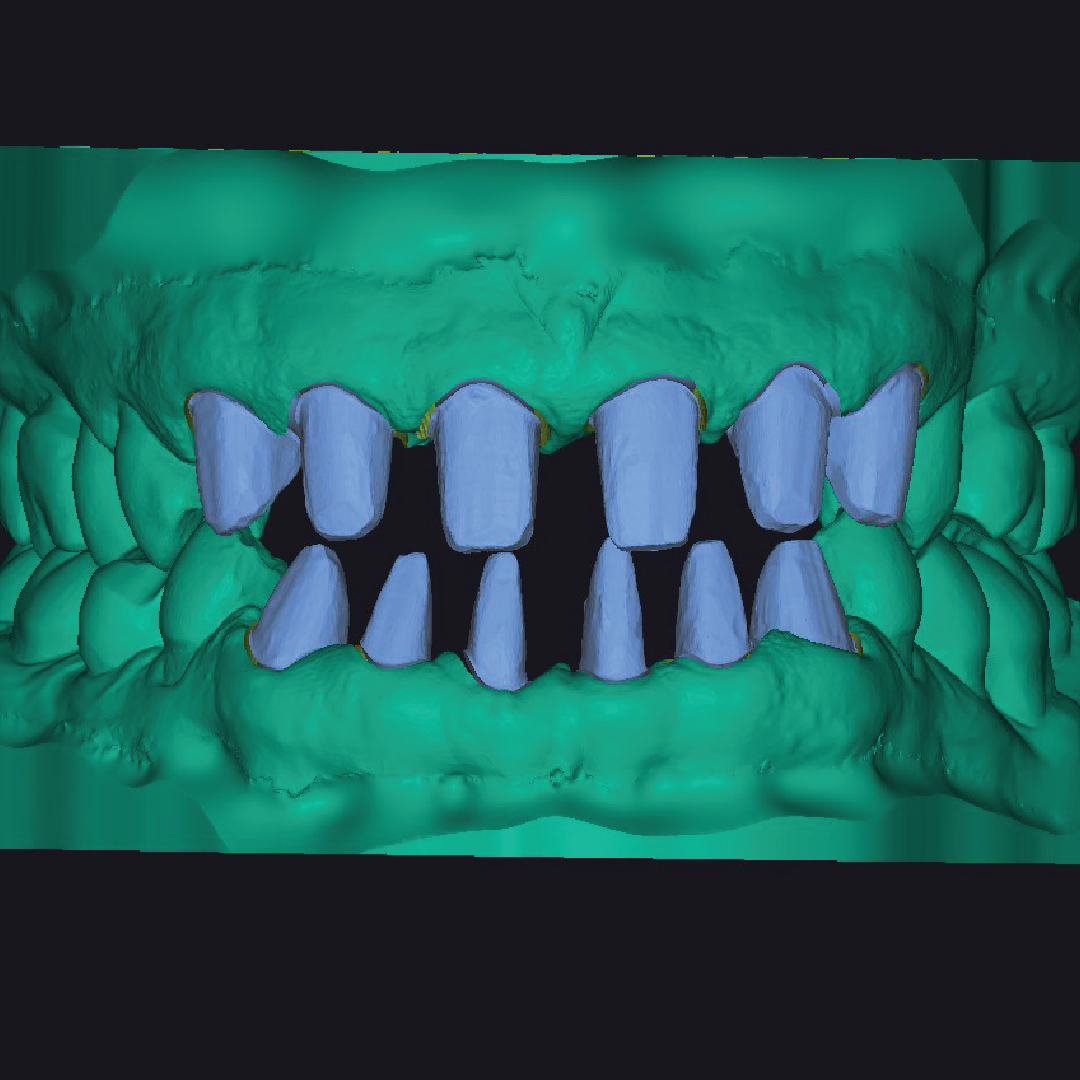
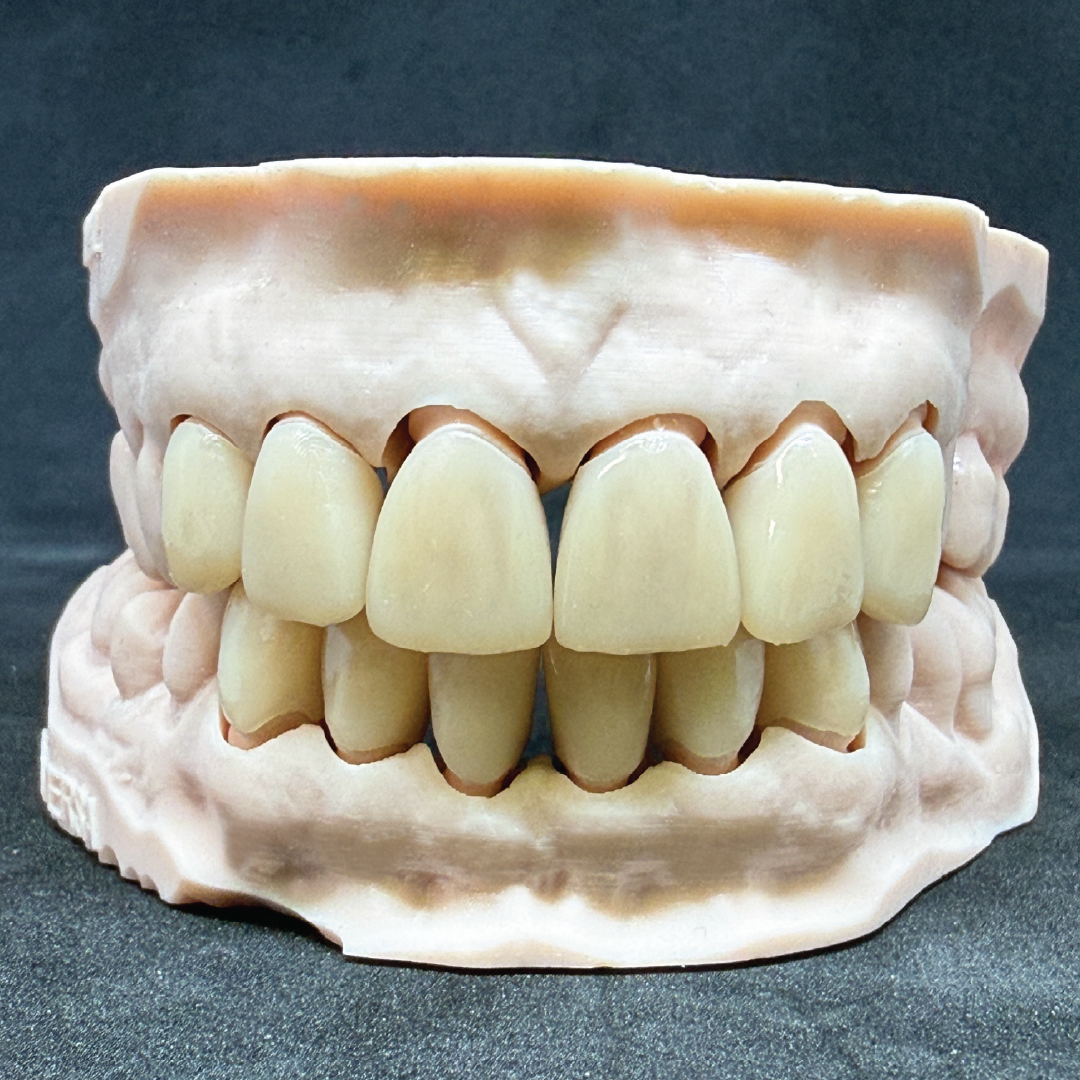
The final test adopted a cross-verification logic: crowns and provisional frameworks in Asiga DentaTOOTH resin positioned on DentaFORM models without any preliminary adjustment. This approach exactly simulates the real clinical workflow, where the model must accept the prosthesis with the same fit expected intraorally.
The use of two Asiga resins from the same family is not coincidental. Both share the same dimensional accuracy, ensuring that post-curing shrinkage compensations are perfectly matched between model and prosthesis. This is one of the key advantages of the integrated Asiga ecosystem compared to assembling materials from different manufacturers.
Fitting quality was assessed according to standard clinical criteria: marginal adaptation without visible steps or gaps, evenly distributed occlusal contacts without evident premature interferences, correct interproximal adaptation, and interproximal contact point with calibrated resistance to dental floss. DentaTOOTH crowns proved perfectly adapted across all parameters, confirming the dimensional consistency of the entire Asiga ecosystem.
Final Considerations
The test carried out at DPZERO has confirmed DentaFORM Beige as a reliable solution not only for the quality of individual restorations, but above all for dental series production. Consistent dimensional precision, post-curing stability, application versatility, and native integration with Asiga Composer combine in a material on which standardised and scalable processes can be built.
From DPZERO’s dental strategy perspective, DentaFORM Beige is confirmed as the standard material for all fixed, implant, and combined prosthetic production workflows. The combination of dimensional precision, mechanical resistance, and compatibility with complex modular systems (X-Snap, implant analogues, removable dies, Artex Print&Click) makes it the ideal choice for dental laboratories operating with advanced digital production logic.
In a sector where cost pressure is constant, the ability to rely on a material that eliminates the empirical variables of the printing process represents a concrete and measurable competitive advantage. There is no need to reinvent parameters with every batch. You print, you cure, you deliver. This is the kind of reliability on which a modern dental production is built.
About the Author
Federico Milano is a dental technician with over 25 years of experience and one of Italy’s leading advocates for the industrial transformation of dental laboratory production. Trained as a ceramist and CAD designer, Federico manages the complete production workflow — from digital design to final delivery — with a precision-driven, scalable approach.
In 2009, Federico co-founded DPZERO in Gallarate, a highly digitised dental laboratory specialising in full-arch implant prosthetics and 3D-printed nanoceramic restorations. DPZERO operates fully digital CAD/CAM workflows and is currently developing a proprietary Manufacturing Execution System (MES) with an AI-driven production scheduling layer — a model designed for industrial-scale dental manufacturing.
Federico has been using Asiga 3D printers since 2018, after an extensive evaluation of the leading resin printing technologies available. Asiga is his benchmark for additive production, particularly for full-arch prosthetic shells in nanoceramic resin — one of the most demanding applications in terms of geometry complexity, dimensional accuracy and repeatability. His workflow integrates 3Shape, Exocad, Blender and Asiga Composer with high-aesthetic nanofill resin materials.
Share: