









Direct 3D printed aligners!

By Matthias Zimmerer
The Historical Context of Aligner Fabrication
For several decades, the orthodontic industry has operated under a manufacturing paradigm that, while functional, remains tethered to analog origins. The production of clear aligners has been defined almost exclusively by the thermoforming, or suck down method. This process involves plastic foils that are heated and vacuum-sealed over a gypsum or 3D printed model of a patient’s dentition. While the introduction of 3D printing for the models themselves was a significant digital leap forward, the actual fabrication of the aligner remained a hybrid endeavor. This workflow inherently includes multiple manual steps, significant material loss, and a high degree of process variability that can affect the clinical outcome.
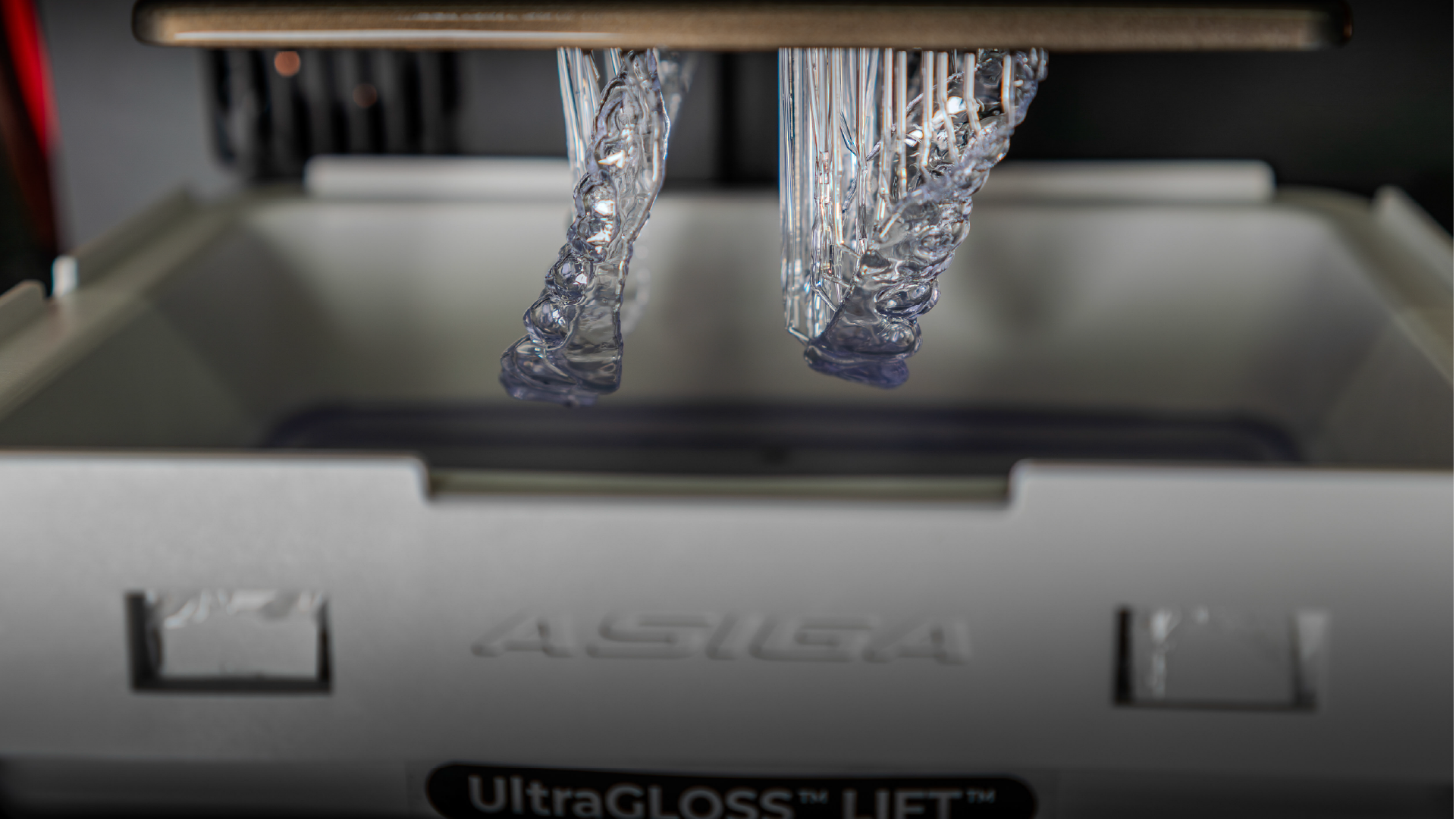
As the demand for clear aligner therapy continues to surge globally, the limitations of this traditional workflow have become more pronounced. Laboratories and clinics are increasingly seeking ways to increase the efficiency and decrease the physical waste associated with sacrificial models and excess foil. The emergence of DETAX Freeprint Aligner, one of the first resins specifically approved and engineered for direct aligner printing, marks a pivotal shift. When utilized with the Asiga UltraGLOSS Lift build trays, this new approach does not just improve the traditional process, but seeks to replace it entirely. This case study explores the transition from an analogue-heavy, foil-based system to a streamlined, fully digital production environment.
The Traditional Workflow: A Burden of Manual Labor
The conventional process for creating an aligner is a multi-stage marathon. It begins with the printing of a physical resin model, which itself requires post-processing (support removal, washing, curing). Once the model is prepared, a plastic foil is thermoformed over it. After the plastic has cooled, the aligner must be manually trimmed from the sheet, polished to remove sharp edges, and subjected to rigorous quality control to ensure that the thermoforming process didn’t introduce thinning or warping.
While this method is clinically proven, it is burdened by significant operational bottlenecks. First and foremost is the manual labor. The multiple manual steps require a skilled workforce, and as volume increases, the need for more hands becomes a barrier to scaling. Furthermore, the surface quality of the final aligner is a secondary byproduct of the model’s surface. If the 3D printed model has layering artifacts or surface roughness, those imperfections are transferred directly to the internal surface of the aligner, potentially impacting both transparency and the precision of the fit. Additionally, the waste generated from foil trimming and the inevitable “rejects” due to heating errors make this a less sustainable and more expensive process than it appears on a balance sheet.
The Direct Printing Revolution
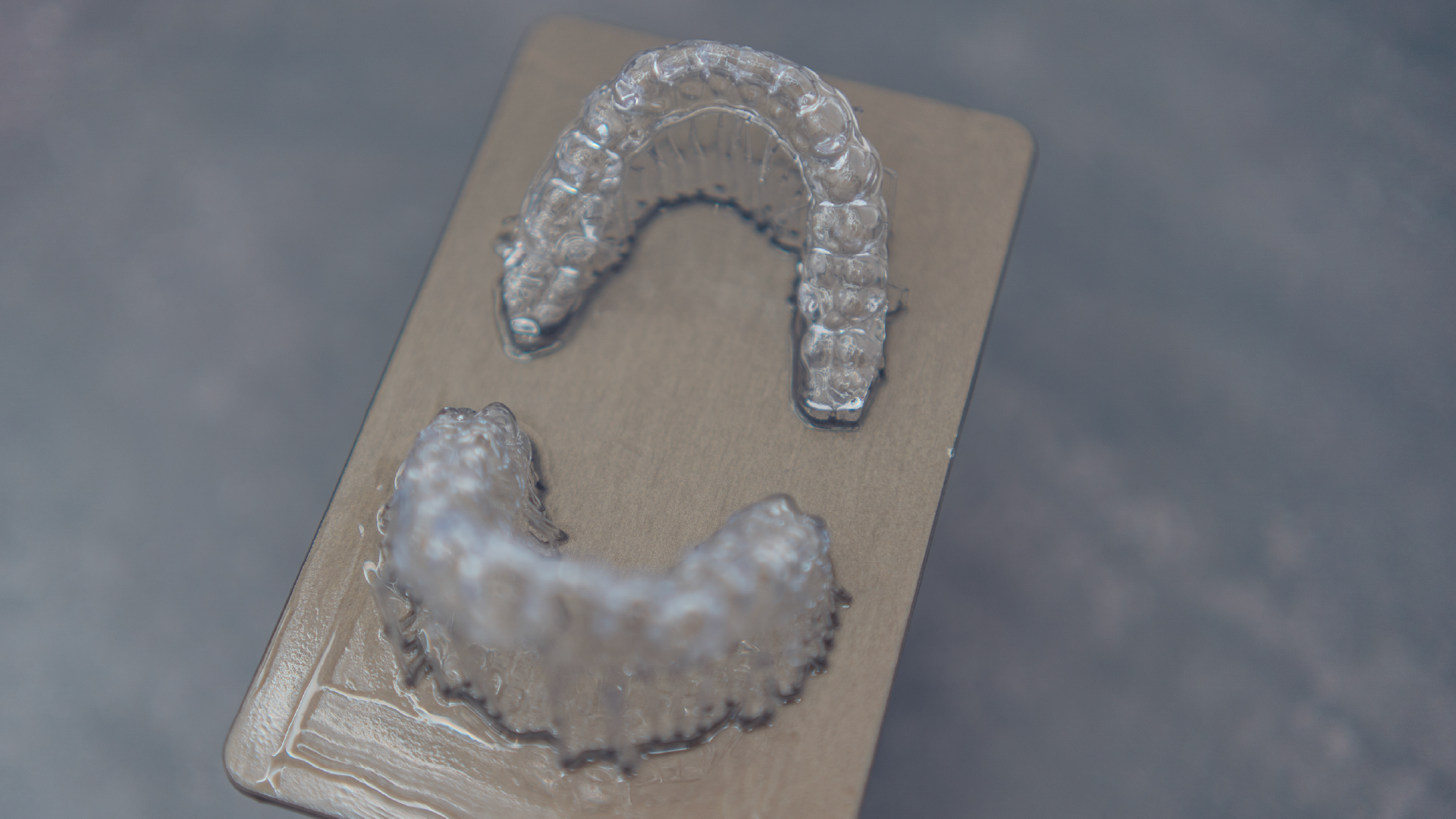
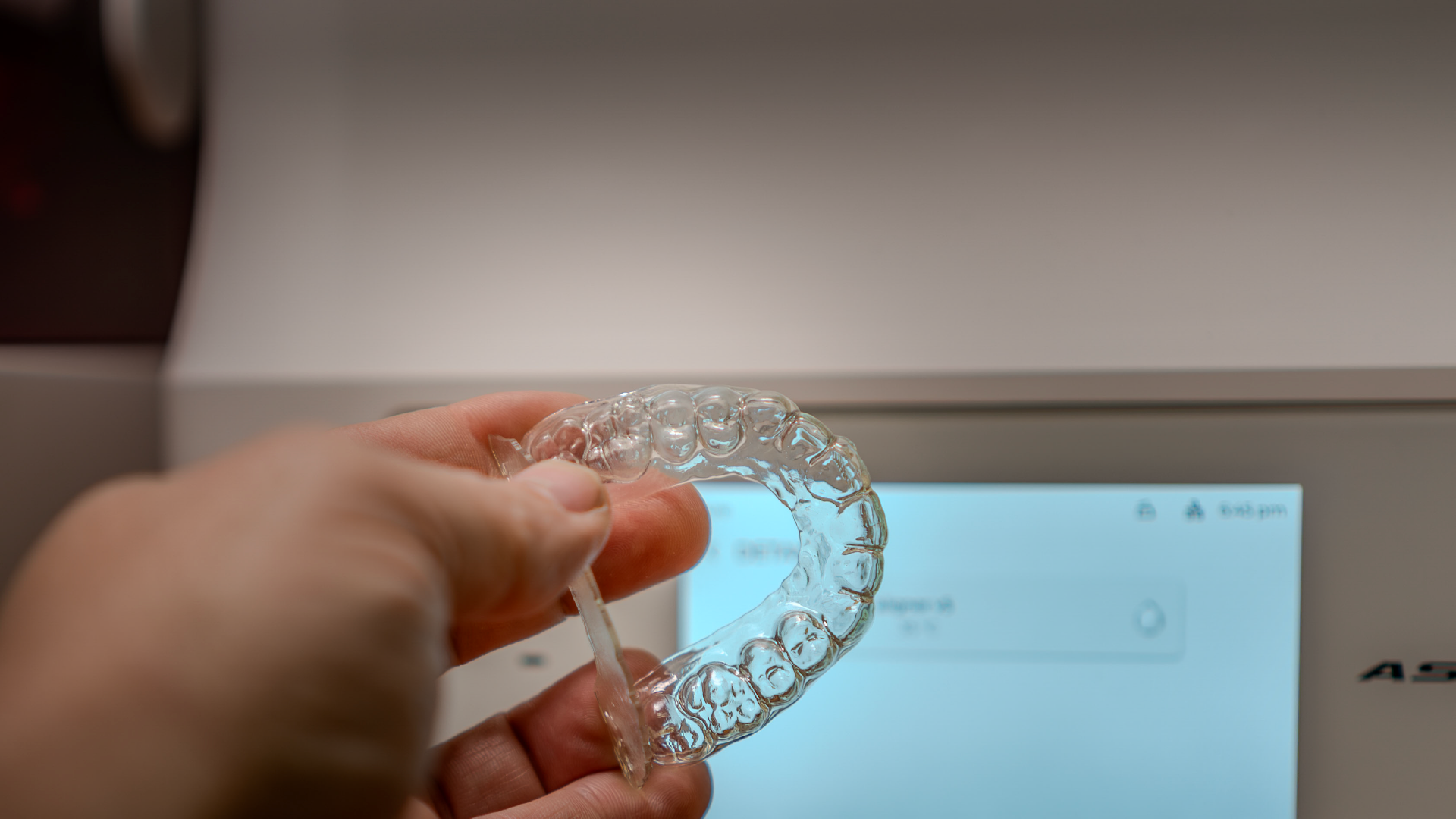
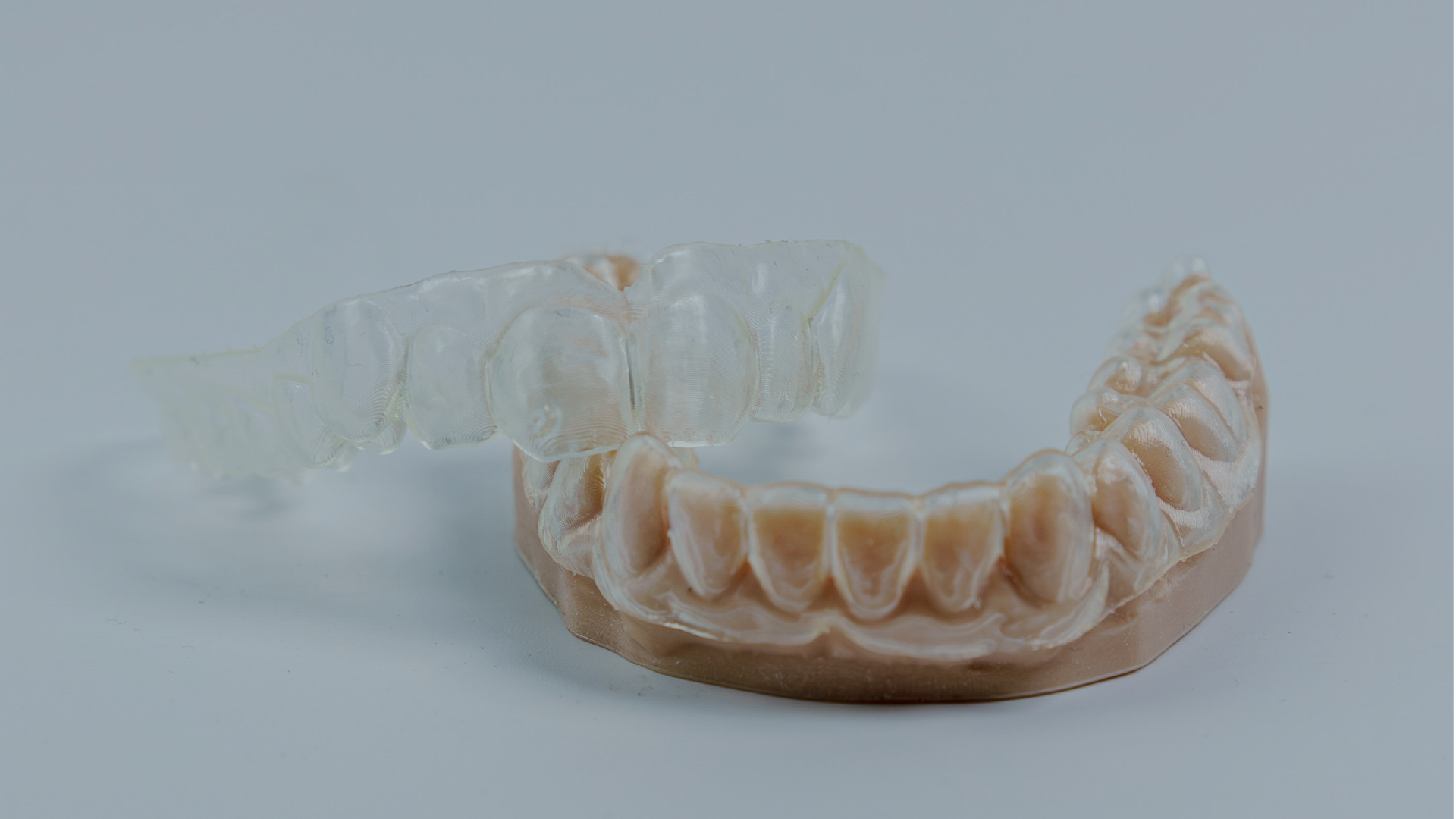
The advent of direct printing changes the fundamental geometry of production. Using DETAX Freeprint Aligner resin, the aligner is no longer a replica of a model, but it is the final product itself. This eliminates the need for the intermediate step of printing a model and the subsequent need for thermoforming foils. This transition is made technically feasible through the synergy of specialized chemistry and the precision of Asiga printers.
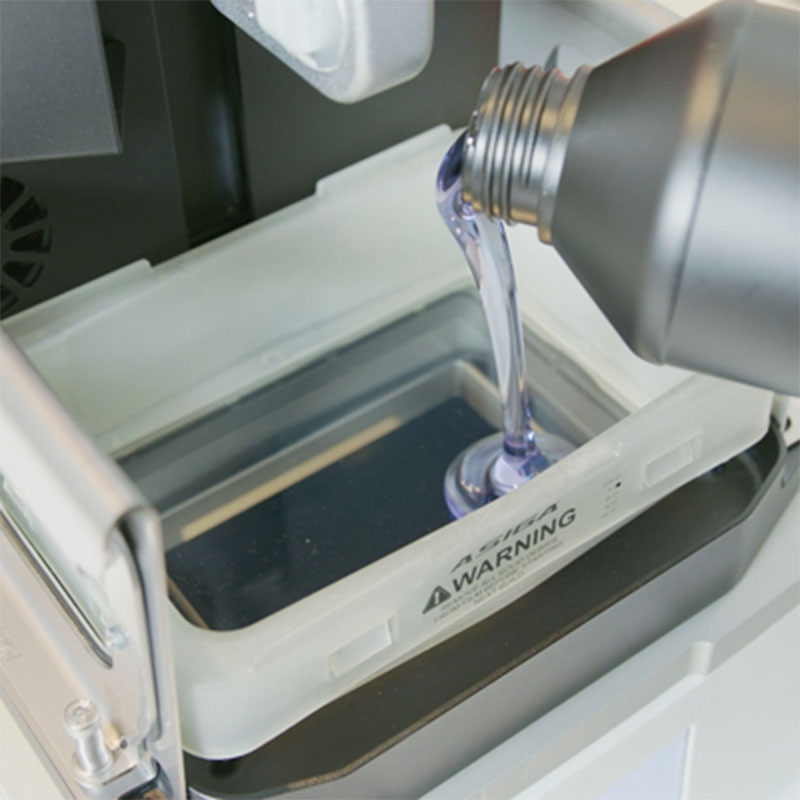
The Asiga UltraGLOSS LIFT Build Trays play a critical role in this new ecosystem. The Liquid Interface Film Technology (LIFT) is designed to reduce the separation forces that occur during the 3D printing process. Because aligners are thin, flexible, and have complex organic geometries, they are traditionally difficult to print directly without distortion. LIFT ensures that these thin walls remain stable and repeatable throughout the build. Simultaneously, the UltraGLOSS feature allows the printed aligners to emerge from the vat with a uniform, smooth, and glass-clear surface. This is a game-changer for production, as it drastically reduces or, in some cases, entirely eliminates the need for manual post-print polishing. By shifting to this method, manufacturing moves from a fragmented, hybrid digital-manual workflow to a unified, fully digital production line.
“Digital dentistry has been in my blood for many years now and I have not seen a technology development quite like this since I started 3D printing with Asiga. In fact, I would refer to this as being the most disruptive development in dentistry this past decade.”
Matthias Zimmerer

A Comparative Analysis: Efficiency and Quality
When comparing directly printed aligners to traditional thermoformed foils, the differences in operational efficiency are stark. In a traditional setup, the number of process steps is high, and the reliance on manual labor is significant. In the direct printing workflow, the process steps are minimal. Once the file is sent to the printer, simply push “print.”
Consistency is perhaps the most valuable byproduct of the digital shift. In the traditional method, the fit and finish of an aligner are operator-dependent; one technician might trim more aggressively than another, or a thermoforming machine might not reach the ideal temperature, leading to slight variations in material thickness. Directly printed aligners, however, offer high, repeatable surface consistency. Because the digital file dictates the exact thickness and margin of the aligner, every unit produced is identical to the design. Furthermore, the material waste is kept to a minimum, as there are no foils to trim and no models to discard.
Operational Impact and the ROI Perspective
For laboratories looking at the bottom line, the return on investment for direct printing is found in the hidden costs of the traditional method. While the price of a single plastic foil may seem low, the “true cost” includes the labor of the technician, the electricity of the thermoforming unit, the cost of the resin for the sacrificial model, and the cost of remakes when a foil cracks or a model breaks.
The Asiga and DETAX workflow shows a reduction in production time per aligner and a significantly lower cost in materials compared to the analogue process. This makes production planning far more predictable. My observations indicate a reduction in manual labor by 30% to 50%. Because these gains scale linearly, a lab that doubles its volume doesn’t necessarily need to double its staff; it simply needs to utilize its digital assets more effectively. Furthermore, the full digital traceability of a printed aligner, where every print job is logged and every design is saved, offers a level of quality assurance that partial digital workflows simply cannot match.
A New Standard for Orthodontics
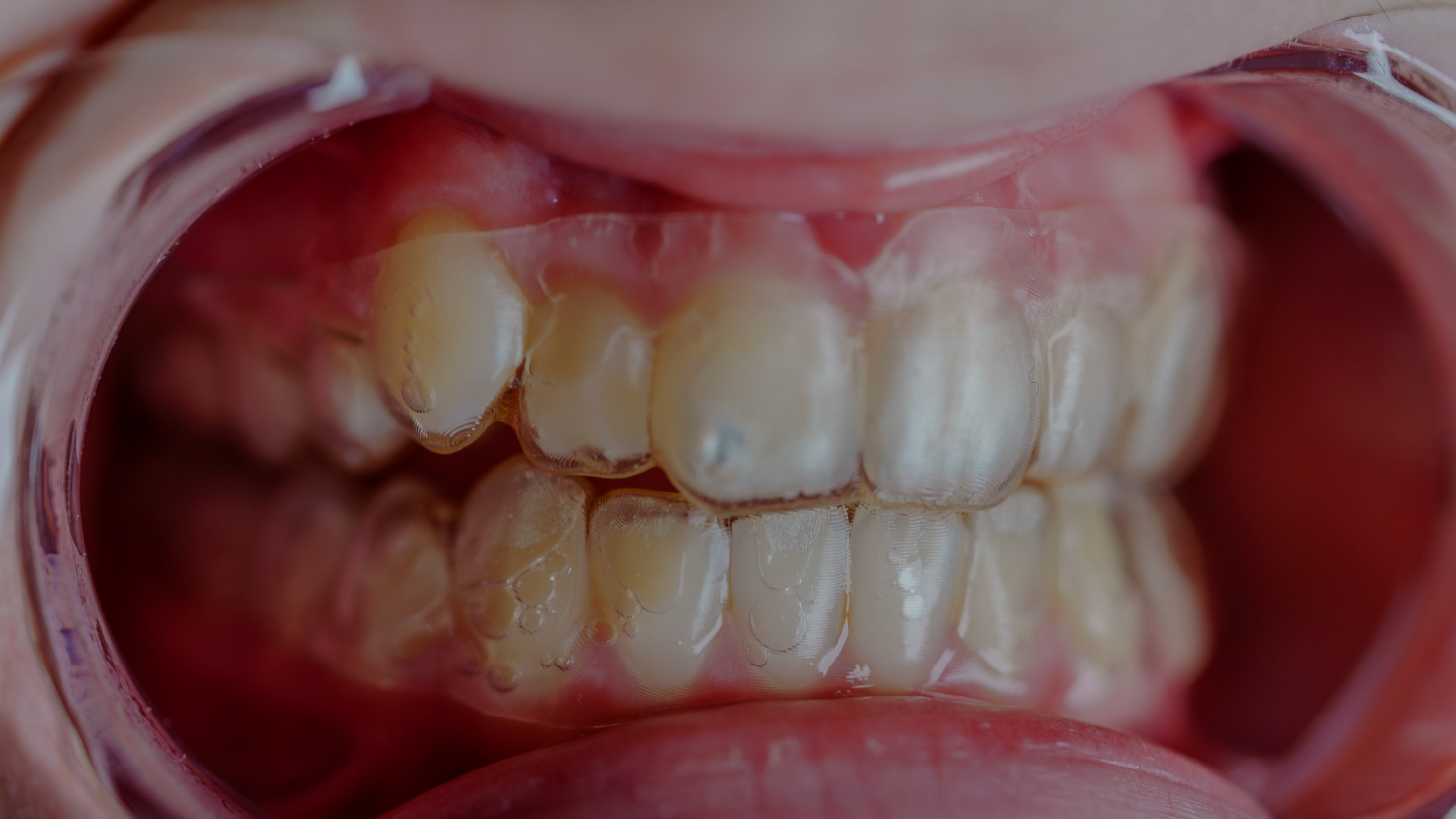
The final takeaway of this transition is that Asiga UltraGLOSS Lift tray/DETAX Freeprint Aligner combination is not merely a competitor to other workflows, resins, or printers. It is a replacement for an entire era of manufacturing. The traditional thermoforming method, while it served the industry well during the infancy of clear aligner therapy, is becoming an anchor for laboratories wishing to scale and modernize.
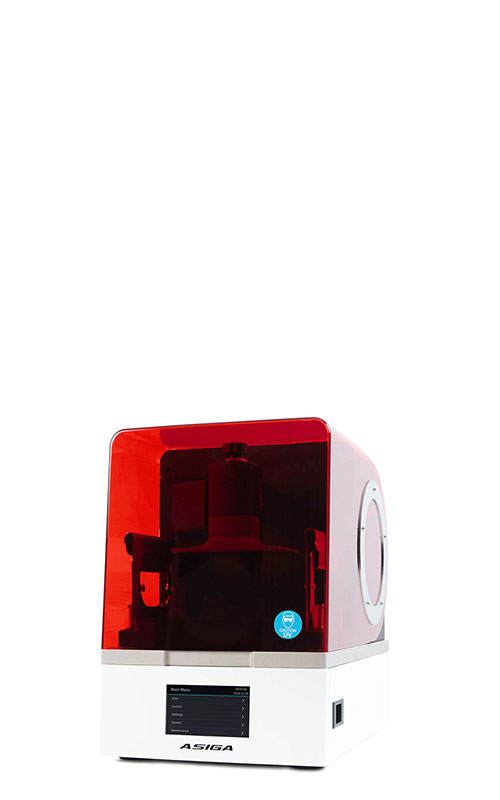
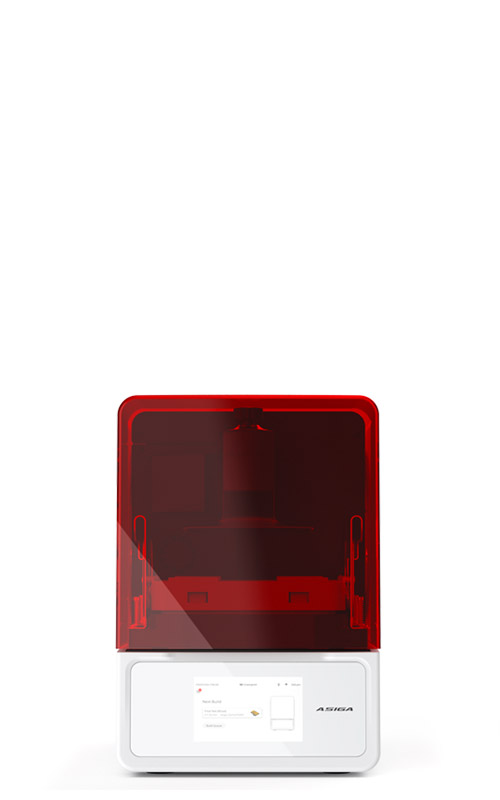
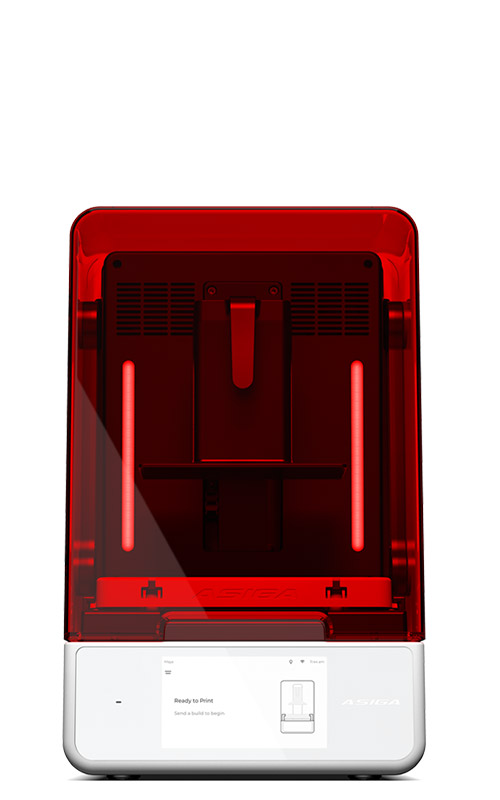
By combining the material science of DETAX with the hardware precision of the Asiga Max 2 and UltraGLOSS LIFT tray, the industry is moving toward a future of fewer steps and fewer variables. Direct aligner printing offers a controlled, repeatable, and scalable alternative that finally aligns the manufacturing process with the digital precision of modern orthodontic software. We are no longer just replicating models; we are printing the future of patient care, one layer at a time.
About the Author
Growing up in his parents’ dental laboratory, the path to dental technology was very obvious for Matthias Zimmerer. The apprenticeship was followed by the successful completion of parts II-IV of the master craftsman’s diploma in the dental technician trade. Afterwards he worked in various jobs in commercial and practice laboratories.
Since 2013 he has been laboratory manager in the practice laboratory of dentist Dr. Heidi Edl in Erbendorf, whose focus is on digital dentistry. Both the integration of the digital workflow to the maximum extent and the further development of the digital production possibilities are part of his everyday life there, in order to optimally tailor aesthetic dentures to the needs of the patients.
He takes great pleasure in integrating new technologies into existing, well-established processes and in constantly optimising them. He sees many possibilities for change and further development in digital dental technology, which he puts to the test every day.
Matthias also had the ingenious idea of starting the Asiga Dental Experts page on Facebook!!
Share: